What is a COA? Certificate of analysis explained for peptides
Research use only. Peptides supplied by Peptryn are sold strictly for in vitro and preclinical laboratory research. They are not approved by the FDA for human or veterinary use, and nothing here is medical advice. This guide explains how to read a laboratory document. It does not tell anyone how to use a peptide.
Quick answer: what is a COA?
A COA is a certificate of analysis: a laboratory report that lists the tests run on one specific batch of a product, the methods used, and the results. For a research peptide, the COA is where you find out whether the vial holds the right molecule, how pure the batch was, and whether it was tested for bacterial endotoxin.
COA stands for certificate of analysis, and you will also see it written CoA. It is a record of one lot’s tests. It is only as reliable as the lab that ran them and the link between the report and the vial in your hand.
Peptryn publishes a page for each of 16 product lots in its COA library, and each page links to a report hosted on the testing lab’s own site. The pages for retatrutide, MOTS-c and SS-31 are walked through below.
- COA meaning: what does COA stand for?
- What a COA is, and what it is not
- What is on a peptide COA
- What the COAs for our peptides show
- How to check a COA against the vial you hold
- What a COA cannot tell you
- Frequently asked questions
- Final take
COA meaning: what does COA stand for?
The COA definition in a lab or product context is certificate of analysis. The abbreviation means other things elsewhere, which is why a search for it returns a mix of results.
| Meaning | Where you see it |
|---|---|
| Certificate of analysis | Laboratories, food, chemicals, supplements and peptides |
| Certificate of authenticity | Art, collectibles and memorabilia |
| Course of action | Military and business planning |
| Chart of accounts | Accounting software and bookkeeping |
| Coenzyme A (usually CoA) | Biochemistry, as in acetyl-CoA |
| Court of appeals | Legal citations |
This page uses the laboratory meaning.
What a COA is, and what it is not
Each COA describes a single lot. Under 21 CFR 210.3, FDA defines a batch as a specific quantity of material intended to have uniform character and quality, produced in a single manufacturing order, and a lot as a batch or an identified portion of one. Two vials with the same product name from different lots can have different results, and the report only speaks for the lot that was sampled.
It comes from the manufacturer’s quality team or from a testing laboratory. When people say third-party tested, they mean the tests were run by a lab that is neither the seller nor the maker. Peptryn’s COA pages state that the testing was performed by MZ Biolabs and link to a report on MZ Biolabs’ own site, which lets you compare our page with the lab’s version.
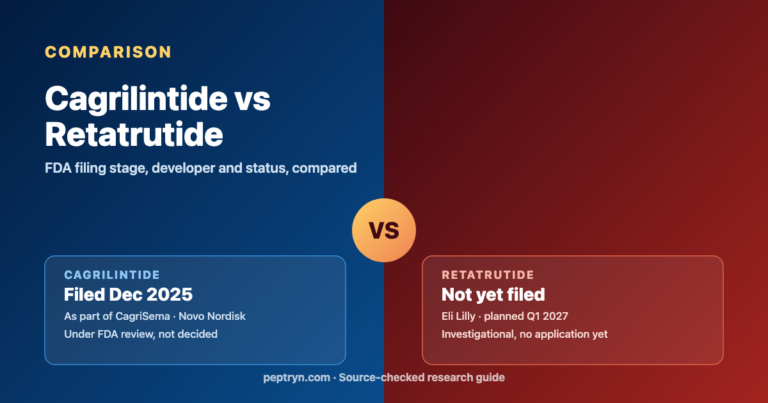
A COA does not decide whether a compound is approved, safe or legal for any use. Retatrutide, for example, is an investigational drug and is not approved by the FDA, whatever a certificate says about its purity. A certificate of conformance is different: it is a seller’s statement that a product meets a specification, and it usually carries no test data. Our guide to reading a certificate of analysis covers that difference and the safety data sheet in detail, and adds a ten-point checklist and a red-flag table.
What is on a peptide COA
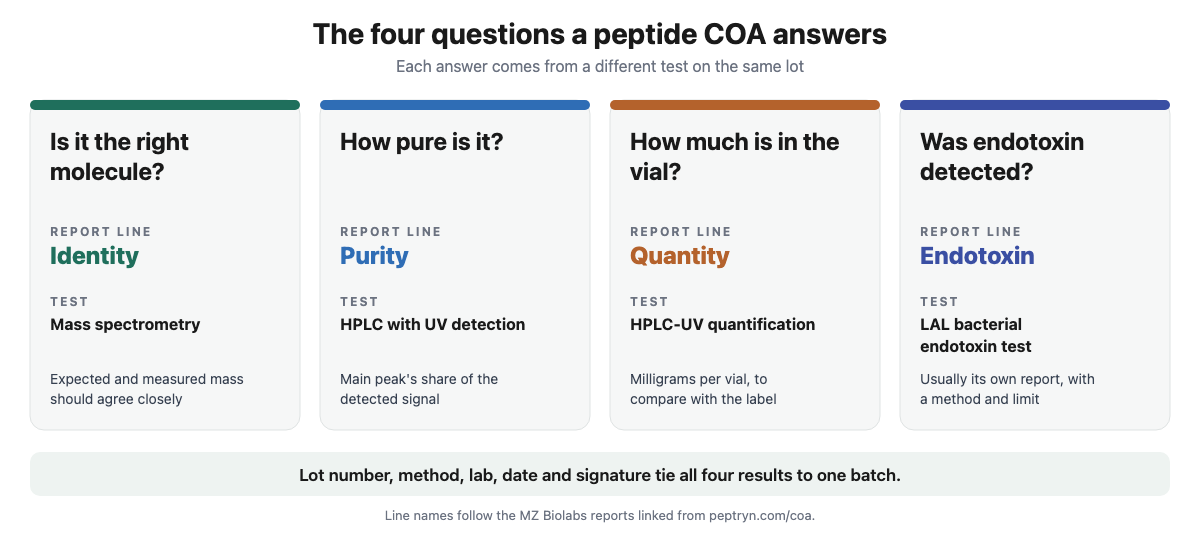
Peptide COAs usually carry eight lines. The table gives the meaning of each and what to check.
| Line | What it means | What to check |
|---|---|---|
| Product and size | The compound and the vial size | Matches your label |
| Lot or batch number | The production run that was tested | Matches the number on your vial or invoice |
| Method | How the sample was tested, for example HPLC-UV-MS | A named method, not a vague phrase |
| Purity | The share of the detected signal that belongs to the main peak | The peak table, not only the headline number |
| Identity | Expected and measured mass from mass spectrometry | The two numbers agree closely |
| Quantity | Milligrams of the target measured per vial | Compare with the label |
| Endotoxin | Whether bacterial endotoxin was detected | A separate report, with its method and limit |
| Lab, date and signature | Who ran the tests and when | A named lab, and a date after the lot was made |
HPLC purity is a share of signal. HPLC separates the components of a sample, a UV detector records how much light each absorbs, and purity is the main peak’s area divided by the total area. A result of 99.62% means 99.62% of the detected UV signal came from the main peak. It does not mean 99.62% of the powder’s weight is peptide. MZ Biolabs’ reports note that injectable peptides may contain salts and sugars that are not normally detected by UV and that the lab does not count as impurities. Our peptide purity guide covers this in more depth.
Mass spectrometry supports identity but does not prove it. It confirms that the sample contains something with the expected mass. It cannot separate two molecules that have the same mass, such as a peptide and its D-amino acid variant.
What the COAs for our peptides show
The COA library lists one certificate per product lot, with the lot number, method, purity and endotoxin result as printed on each page. This table reproduces those figures as they stood on September 20, 2026.
| Product | Lot | HPLC purity | Endotoxin | Certificate |
|---|---|---|---|---|
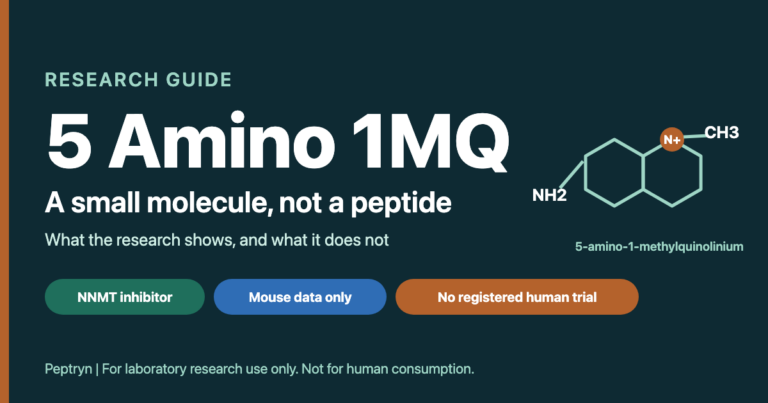
| 5-Amino-1MQ 10 mg | 2026-08-05 | 99.86% | Negative | View |
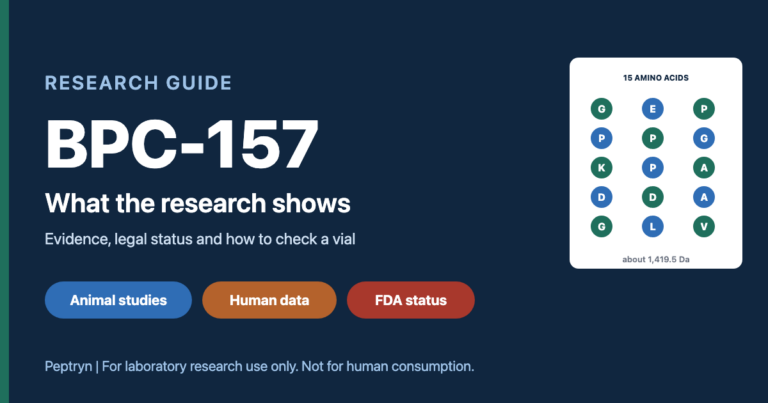
| BPC-157 10 mg | 2026-08-05 | 99.50% | Negative | View |
| CJC-1295 no DAC 10 mg | 2026-08-05 | 99.11% | Negative | View |
| GHK-Cu 100 mg | 2026-08-05 | 99.93% | Negative | View |
| Glow blend 70 mg | 2026-07-07 | 99.81% | Negative | View |
| Glutathione 1500 mg | 2026-08-05 | 99.76% | Negative | View |
| Ipamorelin 10 mg | 2026-08-05 | 99.34% | Negative | View |
| Klow80 blend 80 mg | 2026-07-07 | 99.74% | Negative | View |
| MOTS-c 40 mg | 2026-07-07 | 99.78% | Negative | View |
| Retatrutide 10 mg | 2026-06-12 | 99.62% | Negative | View |
| Retatrutide 30 mg | 2026-08-31 | 99.32% | Not listed, identity confirmed | View |
| Sermorelin 10 mg | 2026-08-05 | 99.65% | Negative | View |
| SS-31 (elamipretide) 50 mg | 2026-08-05 | 99.75% | Negative | View |
| TB-500 10 mg | 2026-08-05 | 99.84% | Negative | View |
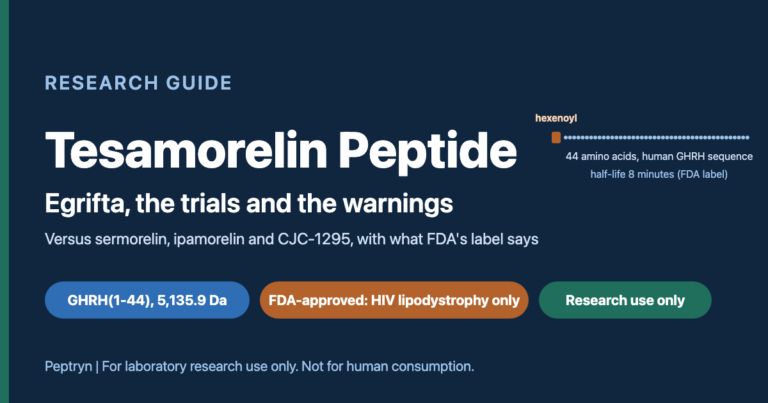
| Tesamorelin 10 mg | 2026-08-05 | 99.97% | Negative | View |
| Wolverine 20 mg | 2026-08-05 | 99.13% | Negative | View |
Across the 16 pages, purity runs from 99.11% to 99.97%, and 15 pages list endotoxin as Negative. The retatrutide 30 mg page lists identity confirmation instead of an endotoxin result. For the blends, check the report to see whether the purity figure covers each component or the blend as a whole.
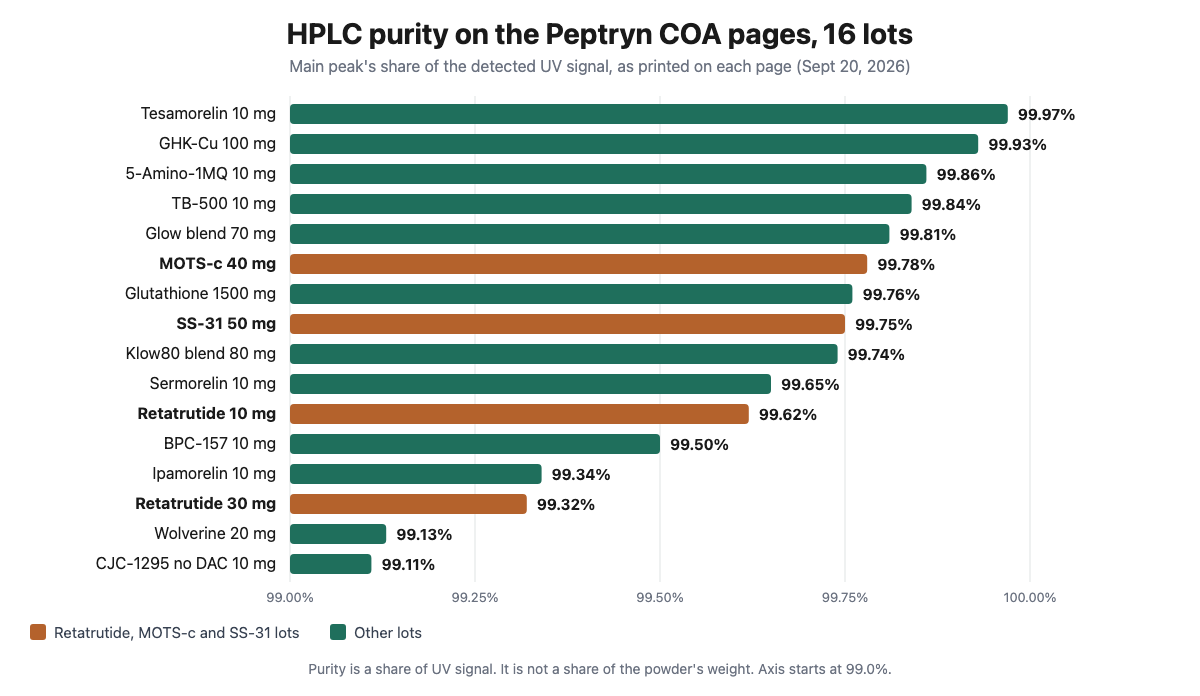
A purity figure in the high 99s describes the main peak of that batch. The sections below show how the same COA lines apply to three molecules of very different size, and a later section lists what no COA line covers.
Retatrutide COA
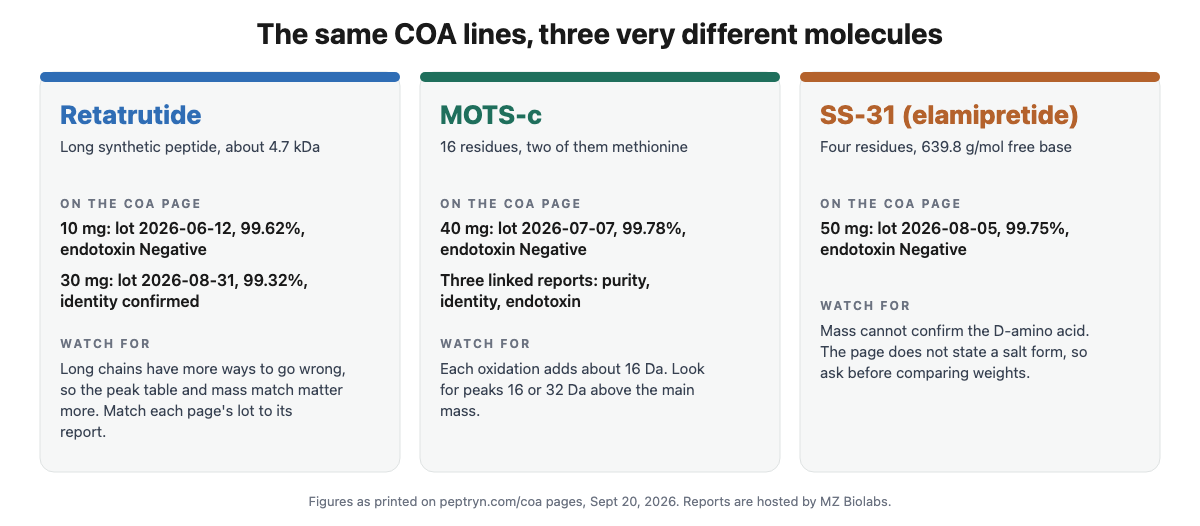
The retatrutide 10 mg page shows lot 2026-06-12, method HPLC-UV-MS, purity 99.62% and endotoxin Negative, with links to a purity and identity report and to an endotoxin report. The 30 mg page shows lot 2026-08-31, purity 99.32% and identity confirmed.
Retatrutide is a large synthetic peptide of about 4.7 kDa. Long synthetic peptides have more ways to go wrong, such as truncated chains or missing residues, so the peak table and the mass match matter more here than for a short peptide. Molecules this size usually appear at several charge states in a mass spectrum, and the report converts them to one mass.
Match the lot number on each page to the lot on the linked report before you rely on either. Retatrutide is not FDA-approved and is sold here for laboratory research only. Our guide to buying retatrutide for research lists the checks to run before you order. Our retatrutide guide covers the handling side, and the retatrutide product page lists the vial.
MOTS-c COA
The MOTS-c page shows a 40 mg lot from 2026-07-07 with purity 99.78% and endotoxin Negative. It links to three separate reports: HPLC purity, mass spectrometry identity and endotoxin.
MOTS-c has 16 residues, and two of them are methionine. Methionine oxidizes easily, and each oxidation adds about 16 Da. An oxidized MOTS-c is a different molecule with a slightly higher mass, so the peak table and the mass spectrum are where a degraded batch would show up. Ask whether the spectrum shows any peak about 16 or 32 Da above the main one. Our MOTS-c guide explains the peptide and its regulatory status, and the MOTS-c product page lists the vial.
SS-31 COA
The SS-31 page shows a 50 mg lot from 2026-08-05 with purity 99.75% and endotoxin Negative. SS-31 is the research name for elamipretide, a four-residue peptide (D-Arg-Dmt-Lys-Phe-NH2) of 639.8 g/mol as the free base.
Two details matter for a small peptide like this. The first residue is a D-amino acid, and a D-amino acid has the same mass as its L form, so a mass match cannot confirm that detail. The COA page also does not state which salt form the vial contains, and the salt changes the weight of the powder. Ask before you compare weights with a free-base figure. The approved drug, elamipretide HCl, is a separate product from a research vial, which our SS-31 guide explains. The SS-31 product page has the listing.
Send questions about a lot, a salt form or a report through the contact page.
How to check a COA against the vial you hold
Run these steps in a few minutes.
- Read the lot number on the vial or invoice and find the same lot on the certificate.
- Open the report on the lab’s own website through the link or QR code, and confirm the lot, compound and size match the page you started from.
- Open the peak table and find the main peak. Note whether the headline purity counts one peak or several.
- Compare the expected and measured mass.
- Look for an endotoxin report and its method.
- Check the analysis date and whether the lab lists a way to contact it.
If the lot on the page and the lot on the report differ, stop and ask the seller to explain. Our peptide testing guide covers sending a sample to an independent lab.
What a COA cannot tell you
A COA reports what the lab tested on the sample it received, and nothing beyond that. Sterility is a separate test from endotoxin. A negative endotoxin result means bacterial endotoxin was not detected at the test’s limit, as FDA’s pyrogen and endotoxin guidance describes it. Water content, residual solvents and the counterion are usually absent from a peptide COA unless the lab ran those tests. A COA also says nothing about how the vial was stored after testing, and a report on one lot does not cover another lot. A 2024 analysis of semaglutide products sold online without a prescription reported problems with content, purity and endotoxin, which is a reason to ask for a lot-specific report.
Frequently asked questions
What does COA stand for?
COA stands for certificate of analysis. It is also written CoA. The same letters mean other things in accounting, the military, law and biochemistry, so context decides.
What is a COA for peptides?
A peptide COA is a lab report for one batch of a peptide. It gives the lot number, the test methods, the HPLC purity, the mass spectrometry identity result, often a measured quantity, and usually a separate endotoxin result.
Is a COA the same as third-party testing?
No. A COA is the document. Third-party testing describes who produced it. A COA written by the seller’s own staff is not third-party testing, and a lab report can be third-party without being lot-specific.
Does 99% purity mean 99% of the vial is peptide?
No. HPLC purity is the main peak’s share of the detected UV signal. Salts, water and other material that UV does not detect are not counted, so the peptide’s share of the powder’s weight is lower.
Who issues a COA?
The manufacturer’s quality unit or a testing laboratory. ICH Q7, the manufacturing guide FDA publishes for drug ingredients, says a certificate reissued by a reseller should name the laboratory that performed the analysis and refer to the original certificate.
How do I know a COA is real?
Match the lot number to your vial, open the report on the lab’s own website and confirm the two agree, and check that the report names a lab that is not the seller. A page that cannot be tied to a lot and a lab has not shown you a result.
Where can I find the COA for a Peptryn product?
Every certificate we publish is in the COA library, one page per product lot, with a link to the lab’s own report. The lab results page describes the testing program.
What is the difference between a COA and an SDS?
A COA reports test results for a lot. A safety data sheet describes the hazards, handling and storage of a substance and is not a lot test report.
Final take
A COA answers four questions about one lot: identity, purity, quantity and endotoxin. Its answers hold for the lot it names and are as reliable as the lab behind it. Start with the lot number, open the lab’s own report, and read the peak table and the mass match before the headline figure. For an A-Z reference of the compounds themselves, see our list of research peptides.
Open the certificate for a specific lot in the Peptryn COA library. For the legal picture around research peptides, read are peptides legal?.
Editorial note: Peptryn sells the research peptides discussed in this guide for laboratory use only. This guide is informational and is not medical advice. Sources are listed below. To report an error, email [email protected].
Sources
- 21 CFR 210.3, Definitions (batch, lot). ecfr.gov
- International Council for Harmonisation. Q7 Good Manufacturing Practice Guide for Active Pharmaceutical Ingredients, section 11.4 Certificates of Analysis. fda.gov
- U.S. Food and Drug Administration. Pyrogen and Endotoxins Testing: Questions and Answers. fda.gov
- Ashraf AR, Mackey TK, Vida RG, et al. Multifactor quality and safety analysis of semaglutide products sold by online sellers without a prescription. J Med Internet Res, 2024. pmc.ncbi.nlm.nih.gov
- Peptryn COA library, certificate pages for the 16 listed lots, read September 20, 2026, with the reports hosted by MZ Biolabs. peptryn.com/coa
All products on peptryn.com are intended for laboratory research purposes only. Not for human consumption, self-administration, or veterinary use. The information on this page has not been evaluated by the U.S. Food and Drug Administration and is not intended to diagnose, treat, cure, or prevent any disease.