LL-37 Peptide: What It Is, What Research Reports and Where the Evidence Stops (2026)
Research use only. This guide is education, not medical advice. LL-37 is not an FDA-approved drug, and nothing here is a dosing recommendation, a protocol or an instruction for self-administration. Peptryn gives none. Study results describe what researchers reported in cells, animals and small trials. They say nothing about any Peptryn product.
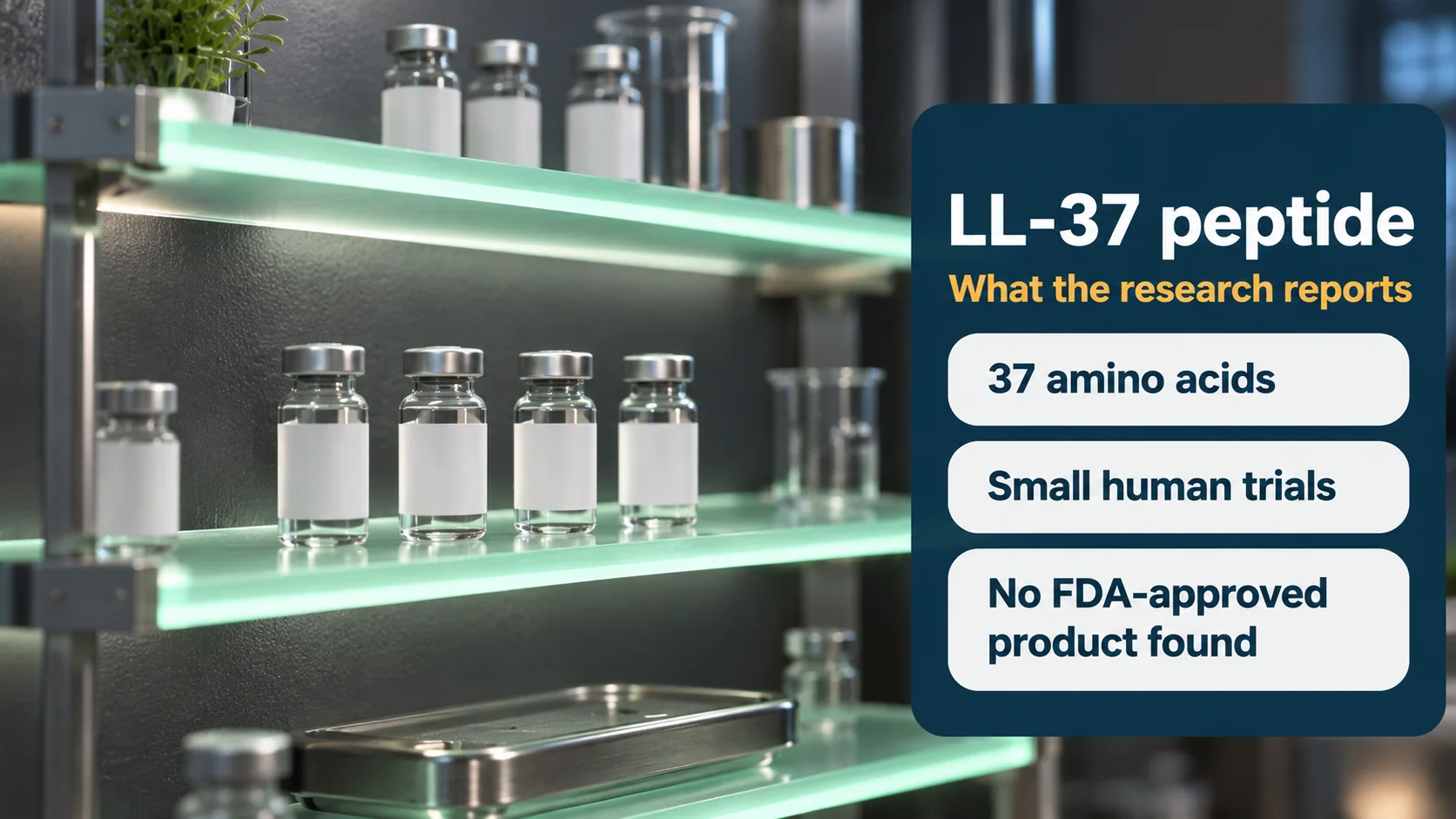
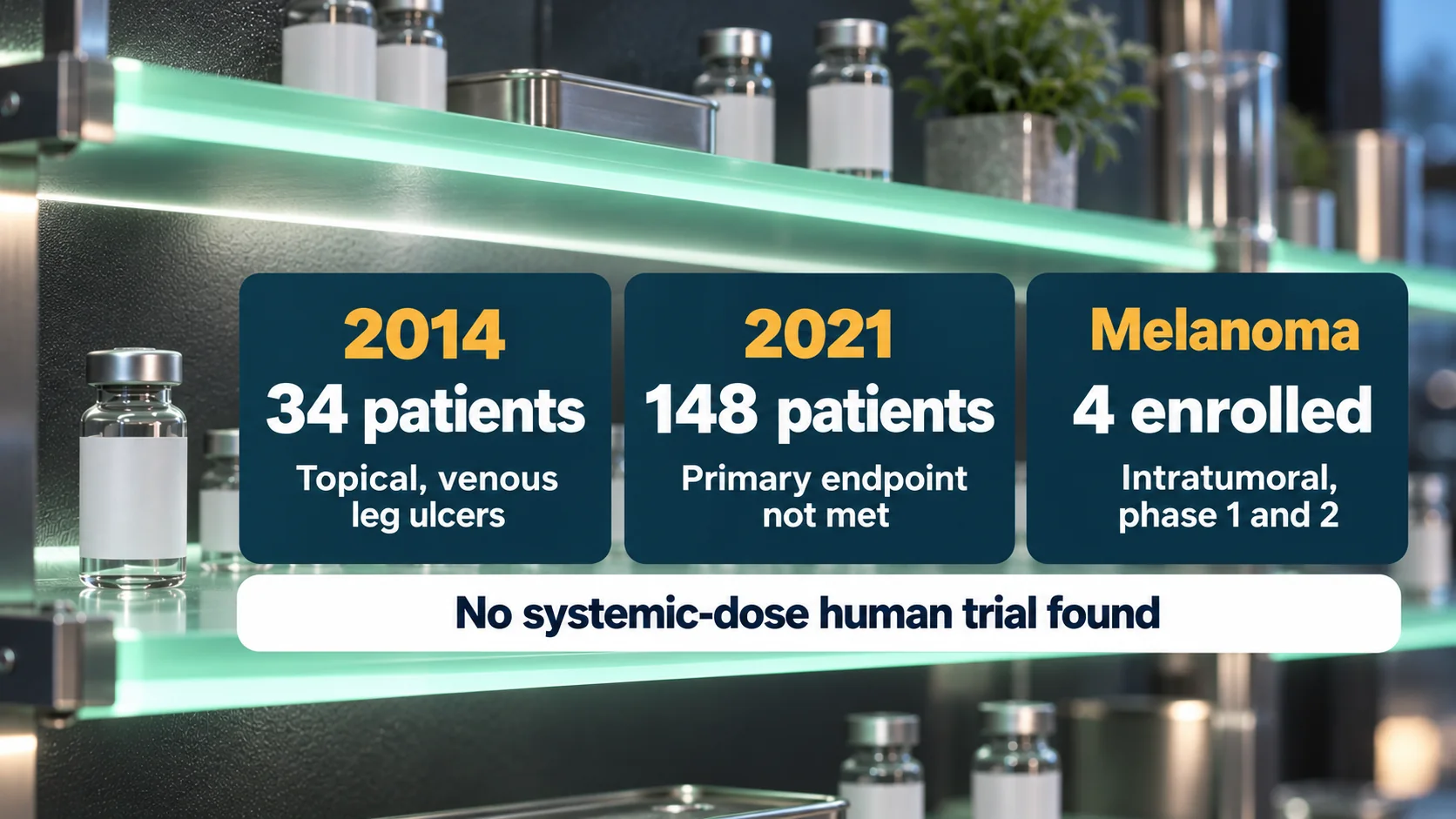
Short answer: LL-37 (also typed LL37) is a 37-amino-acid peptide that human cells cut from a larger precursor, hCAP18, which the CAMP gene encodes. Its formula is C205H340N60O53, its average mass is about 4,493 Da and its monoisotopic mass is 4,490.58 Da. Published work covers killing of bacteria in culture, immune-cell signaling and wound biology. The human data come from topical and intratumoral studies: a 34-patient trial in 2014, a 148-patient trial in 2021 that missed its primary endpoint, and a 4-patient melanoma study. As of October 15, 2026 we found no FDA-approved LL-37 product.
Key takeaways
- LL-37 is residues 134 to 170 of hCAP18. Its international nonproprietary name is ropocamptide.
- Most findings come from cell and animal work. In one 1998 study LL-37 stopped E. coli growth at 5 µM and damaged several eukaryotic cell types at 13 to 25 µM.
- The 148-patient venous leg ulcer trial missed its primary endpoint, and its improved subgroup was a post hoc analysis.
- FDA lists “Cathelicidin LL-37” among bulk substances nominated for compounding and then withdrawn. It plans to take LL-37 to an advisory committee before the end of February 2027.
- We found no systemic-dose human trial and no human pharmacokinetic study.
Last verified October 15, 2026. Sources are listed at the end. For laboratory and research use only. Nothing here is medical or legal advice.
Contents
- LL-37 at a glance
- Where LL-37 comes from
- Structure, formula and mass
- What research reports, by study type
- Results that point in different directions
- Regulatory status as of October 15, 2026
- What the studies did not show
- Quality and certificates: what to look for with LL-37
- How LL-37 differs from compounds it gets confused with
- Common questions
LL-37 at a glance
| Item | Value |
|---|---|
| Names | LL-37, cathelicidin LL-37, hCAP18 residues 134 to 170; gene CAMP; INN ropocamptide |
| Sequence | LLGDFFRKSKEKIGKEFKRIVQRIKDFLRNLVPRTES (37 residues, free N-terminal amine, free C-terminal acid, L-amino acids only) |
| Formula | C205H340N60O53 |
| Monoisotopic mass | 4,490.58 Da (PubChem 4,490.5754; matches this guide’s calculation) |
| Average mass | 4,493.26 Da (calculated from the formula with IUPAC atomic weights) |
| Registry numbers | CAS 154947-66-7; UNII 3DD771JO2H; PubChem CID 16198951 (trifluoroacetate salt record: CID 137699475); UniProt P49913 |
Where LL-37 comes from
Agerberth and colleagues (1995, PNAS) cloned a cDNA from human bone marrow that encodes a 170-residue precursor. The predicted 39-residue peptide, which they named FALL-39 for its first four residues, killed E. coli and B. megaterium as a synthetic peptide. LL-37 takes its name the same way: two N-terminal leucines and 37 residues. Gudmundsson and colleagues (1996, European Journal of Biochemistry) sequenced the gene, which has four exons, and found that the mature peptide isolated from degranulated cells was LL-37.
Sorensen and colleagues (2001, Blood) found that proteinase 3 cleaves hCAP-18 to LL-37 in exocytosed neutrophil material. UniProt lists shorter forms that serine proteases make on skin (KR-20, LL-23, LL-29, KS-30, RK-31 and FF-33), so “LL-37” names one member of a family of fragments.
Structure, formula and mass
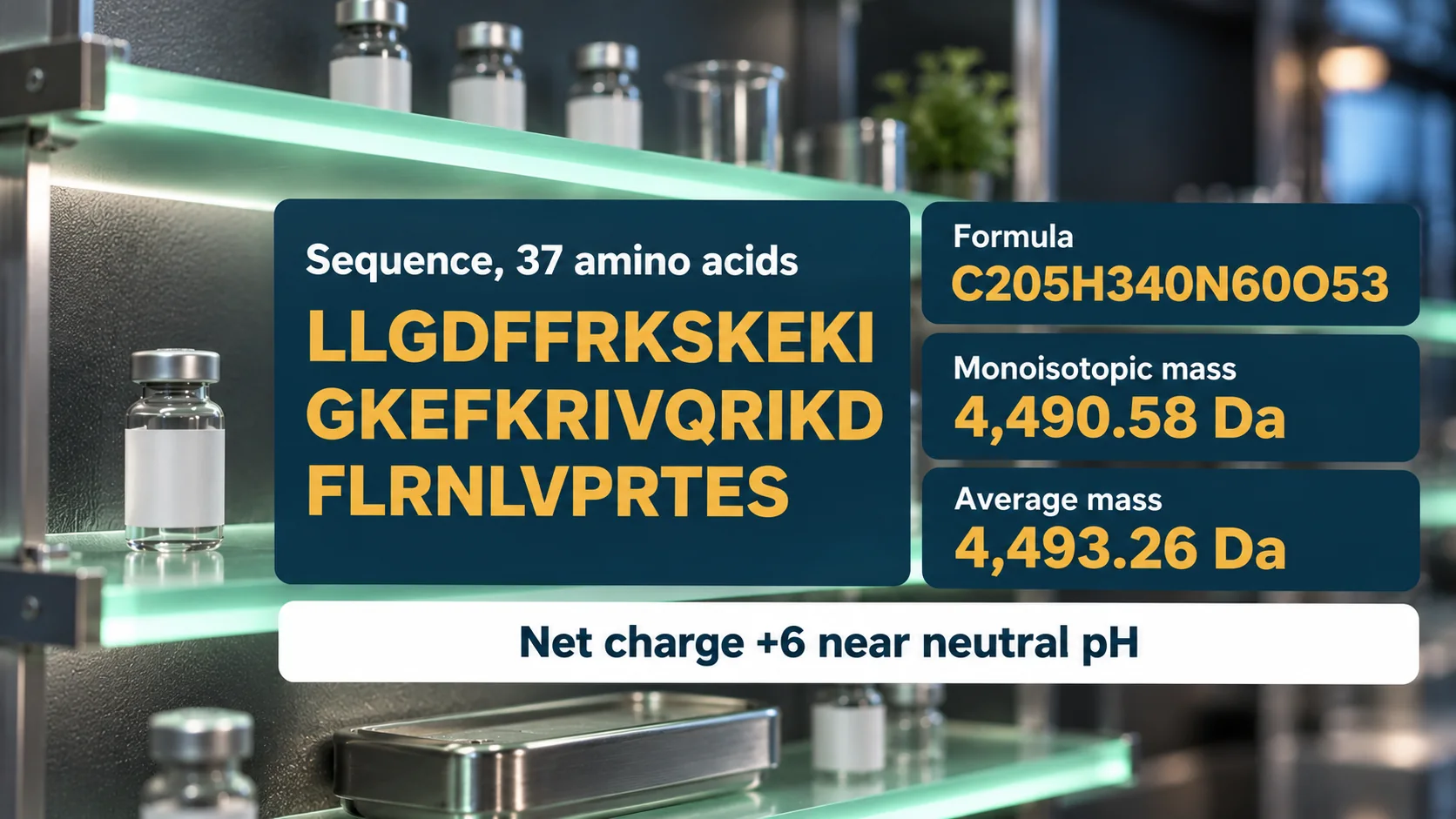
LL-37 has no cysteine, methionine, tryptophan, tyrosine or histidine. Counted from the sequence, it holds 6 lysine, 5 arginine, 4 leucine, 4 phenylalanine and 18 other residues. The 11 basic side chains outweigh the 5 acidic ones, which gives the +6 net charge that Sikora (2018) lists.
Shape depends on conditions. Johansson and colleagues (1998, Journal of Biological Chemistry) found LL-37 disordered in water, helical with bicarbonate, sulfate or trifluoroacetate, and disordered again at pH 2. Sancho-Vaello and colleagues (2020) crystallized it with detergents and saw a narrow tetrameric channel.
| Quantity | Value |
|---|---|
| Monoisotopic mass | 4,490.5754 Da |
| Most abundant isotope peak (M+2) | 4,492.58 Da |
| PubChem “Exact Mass” field for this record | 4,492.5821 Da |
| 1 mg of pure peptide | About 0.2226 micromoles |
PubChem’s “Exact Mass” for this record matches the most abundant isotope peak, not the monoisotopic mass. At this size the monoisotopic peak stands about 31% as tall as the tallest one, so the MZ Biolabs report cited below labels the dominant peaks.
Electrospray adds protons, so a 4.5 kDa peptide appears as several charge states. Sikora and colleagues list 4+ to 8+. These values are this guide’s calculation.
| Charge | Monoisotopic m/z | Average-mass m/z | Most abundant peak m/z |
|---|---|---|---|
| 3+ | 1,497.87 | 1,498.76 | 1,498.53 |
| 4+ | 1,123.65 | 1,124.32 | 1,124.15 |
| 5+ | 899.12 | 899.66 | 899.52 |
| 6+ | 749.44 | 749.88 | 749.77 |
| 7+ | 642.52 | 642.90 | 642.80 |
| 8+ | 562.33 | 562.67 | 562.58 |
What research reports, by study type
We read the abstracts of 34 papers through NCBI and the full text of several. Years are publication years.
Cell and biochemical work. Turner and colleagues (1998, Antimicrobial Agents and Chemotherapy) measured minimum inhibitory concentrations below 10 µg/mL against seven bacterial groups, among them P. aeruginosa, E. coli, S. aureus and vancomycin-resistant enterococci, even in 100 mM sodium chloride. MRSA, P. mirabilis and C. albicans resisted at that salt level and were susceptible in low-salt media. Johansson and colleagues (1998) reported 5 µM as the minimum inhibitory concentration for E. coli and cytotoxicity to several eukaryotic cell types at 13 to 25 µM, with human serum blocking both. De Yang and colleagues (2000) found LL-37 chemotactic for monocytes, neutrophils and T lymphocytes. Mookherjee and colleagues (2006) found that 1 µg/mL or less reduced TNF-alpha release from stimulated human monocytic cells.
Animals, tissue and wound fluid. Bals and colleagues (1999) used an adenoviral vector in mice to express the hCAP-18 precursor, and the mice carried lower bacterial loads after a P. aeruginosa challenge. That tested gene expression, not peptide delivery. Cirioni and colleagues (2006) compared LL-37 with three antibiotics in three rat sepsis models, and every compound reduced lethality against saline. Heilborn and colleagues (2003) found hCAP18 rising in wounded human skin and low in chronic ulcers, and antibodies against LL-37 inhibited re-epithelialization in organ-cultured skin. Gronberg and colleagues (2011) found no apparent cleavage of synthetic LL-37 over 24 hours in wound fluid from 9 venous ulcers, while trypsin degraded it.
Human studies.
| Study | Design and size | What the authors reported |
|---|---|---|
| Gronberg et al., 2014, Wound Repair and Regeneration | First-in-man, randomized, double-blind, placebo-controlled, topical, venous leg ulcers, 34 patients | Healing-rate constants for the two lower concentrations ran about sixfold and threefold above placebo (p = 0.003 and 0.088), and the highest concentration showed no difference. No safety concerns. |
| Mahlapuu et al., HEAL LL-37, 2021, Wound Repair and Regeneration | Phase IIb, randomized, double-blind, placebo-controlled, topical, 15 sites in Poland and Sweden, 148 treated | The primary endpoint, confirmed complete wound closure, showed no significant improvement (26.5% and 24.7% in the LL-37 arms, 25.3% on placebo). A post hoc subgroup with wounds of at least 10 cm² improved on several measures. Twelve non-fatal serious adverse events in 11 patients, none judged related. Promore Pharma AB funded the trial. |
| NCT02225366, M.D. Anderson, completed November 2020 | Phase 1/2, open label, intratumoral, metastatic melanoma, 4 enrolled | Primary outcome was the optimal biological dose by toxicity. The registry lists non-serious adverse events only. Too small for any efficacy conclusion. |
| NCT04098562, Universitas Indonesia, status unknown | Phase 2, LL-37 cream versus placebo cream, diabetic foot ulcers, 40 estimated | Last updated September 2019. No results posted. |
Both venous ulcer trials tested topical LL-37, and the larger one missed its primary endpoint. Promore’s October 2023 liquidation notice describes the phase IIb result as positive. This guide uses the paper’s wording. A case report (Dolkar 2018) of one melanoma patient who received intratumoral LL-37 injections describes shrinkage of the injected lesions, then a skin eruption that resolved within 2 months of stopping. A 19-patient proof-of-concept study (Krejner 2017) measured the body’s own LL-37 and tested no product. A ClinicalTrials.gov search found only two registered studies that give LL-37 itself, the melanoma and foot ulcer trials. The two venous ulcer trials carry EudraCT numbers 2012-002100-41 and 2018-000536-10, as the papers give them.
Results that point in different directions
Kahlenberg (2013, Journal of Immunology) wrote that LL-37 may contribute to psoriasis, atopic dermatitis, lupus, rheumatoid arthritis and atherosclerosis. Liu and colleagues (2026) wrote that its effects depend on the environmental background and vary with concentration, disease stage and local microenvironment.
| Year and authors | System | What they reported |
|---|---|---|
| 2007, Lande et al. | Human cells and psoriasis skin | LL-37 turned self-DNA into a trigger of interferon production through TLR9, a pathway the authors suggest may drive psoriasis. |
| 2007, Yamasaki et al. | Human skin and mouse | Rosacea skin has high, altered cathelicidin, and rosacea-type peptides raised inflammation in mouse skin. |
| 2006, Ciornei et al. | Human lesions and cells | LL-37-like staining in atherosclerotic plaques, and 30 µg/mL killed cultured vascular smooth muscle cells. |
| 2005, Heilborn et al. | Human breast tumors, cell lines | Synthetic LL-37 increased epithelial cell proliferation, and the authors say the findings do not support an antitumor effect. |
| 2009, Coffelt et al. | Mouse ovarian xenografts | Neutralizing LL-37 reduced engraftment of stromal cells and inhibited tumor growth. |
| 2012, Ren et al. | Colon cancer cells, Camp-deficient mice | LL-37 activated a p53-mediated apoptotic pathway, and the deficient mice were more susceptible to induced tumors. |
| 2023, Ohuchi et al. | Human melanoma sections, mouse and human cells | LL-37-positive cells rose with melanoma T stage. The authors suggest LL-37 may promote local invasion. |
The 2012 colon result points the opposite way from the 2005 and 2009 results. All seven studies used cells, tissue or mice, and none tests LL-37 given to a person.
Regulatory status as of October 15, 2026
We found no FDA-approved LL-37 or ropocamptide product. DailyMed (database published October 14, 2026) holds no label under either name, and an openFDA query returned no match. Absence from a database is not proof, and Ridyard (2021) also wrote that LL-37 had not received approval as a peptide antibiotic.
| Item | What we found |
|---|---|
| FDA bulk substances page | “Cathelicidin LL-37” sits in the table of substances nominated for compounding and withdrawn from category 2 (content current as of April 22, 2026). FDA’s risk text cites immunogenicity for certain routes, peptide-related impurities and characterization problems, too little safety information, and nonclinical findings that suggest detrimental effects on male reproduction and a protumorigenic effect in some tissues. We could not find the studies FDA relied on. A May 2026 Goodwin note says withdrawal does not by itself make a substance eligible for compounding. |
| FDA advisory committee | FDA says it will hold a Pharmacy Compounding Advisory Committee meeting before the end of February 2027 on substances for the 503A list: Cathelicidin (LL-37), GHK-Cu, Dihexa acetate, Melanotan II and PEG-MGF. FDA’s page, last updated April 15, 2026, gave no date or place. |
| Warning letters | Our web searches found none that names LL-37. FDA’s August 24, 2026 letter to another research-use-only seller covers other compounds and says research-use-only wording does not override evidence of intended human use. |
| Anti-doping | The WADA 2026 Prohibited List does not name LL-37. Whether its catch-all section S0 reaches LL-37 is unconfirmed. |
| Developer | Promore Pharma AB announced voluntary liquidation on October 12, 2023. We found no later owner. |
| Not checked | 503B status, the EU and other regulators. |
GHK-Cu and Melanotan II share that agenda, and Peptryn has explainers on copper peptides and melanotan II. For general background see are peptides legal? and are peptides safe?.
What the studies did not show
- No systemic human data. The human trials tested topical or intratumoral use. We found no human pharmacokinetic study, no systemic-dose toxicology study and no registered trial of an oral or systemically injected form.
- A missed primary endpoint. The 148-patient trial’s improved subgroup came from a post hoc analysis, which generates a hypothesis.
- No bridge to research vials. The venous ulcer trials tested topical drug formulations. Their results do not carry to any other preparation, including material sold for laboratory use.
- No registered human trial behind many web claims. Web pages and related searches mention nasal sprays, gut health, Lyme disease, COVID and bodybuilding. Our registry search found no trial of LL-37 for any of them.
- Condition-sensitive activity. Salt (Turner 1998), serum (Johansson 1998), proteases (Sieprawska-Lupa 2004) and the counter-ion (Sikora 2018) each changed LL-37 activity or survival in the lab.
- Known limits. Ridyard (2021) and Voronko (2025) name high cost, low proteolytic stability and cytotoxicity as obstacles.
Quality and certificates: what to look for with LL-37
The certificate reading guide covers the general format, and the peptide purity guide explains area percent. Four points apply to LL-37.
Purity does not state content. LifeTein describes HPLC purity as the target peptide’s share against peptide-related impurities, and net peptide content as the peptide’s share against non-peptide material such as moisture and counter-ions. Sikora and colleagues (2018) measured a peptide mass fraction of 0.719 mg per mg for an LL-37 trifluoroacetate salt in their lab, 0.791 for the acetate and 0.857 for the chloride, and warned that this method gives no absolute content. At 0.719, a 5 mg gross powder would hold about 3.6 mg of peptide (this guide’s arithmetic, not a prediction for any vial).
Salt form. Sikora and colleagues state that synthetic peptides purified by reversed-phase HPLC come out as trifluoroacetate salts. Their LL-37 salt carried 155.82 µg of trifluoroacetate per mg of sample, and LL-37 has 12 positively charged sites that can pair with a counter-ion (6 lysine, 5 arginine and the N-terminal amine). Sikora’s chloride form of LL-37 showed lower stability. A report that names the salt and the method tells you what the powder is.
Identity by mass. A report should show the expected monoisotopic mass (4,490.58 Da) and labelled ions from the table above. One published MZ Biolabs report for another seller’s lot (Biotech Peptides lot 3141045, analyzed July 15, 2026) lists 4,490.58 Da expected and 4,490.59 Da measured, with labelled peaks of 1,124.147, 899.518, 749.765 and 642.799 for 4+ to 7+, all within 0.006 m/z of the most abundant values above. We cite it for format only.
Endotoxin and quantity. LL-37 binds E. coli lipopolysaccharide with high affinity (Turner 1998), so a buyer can ask whether the lab validated its endotoxin method for this peptide. We found no source that settles that question. One vendor’s September 2026 report lists content of 6.10 mg against a 5 mg label (122%) beside a statement that trifluoroacetate was not detected. The report does not say what the content figure measured, so we cannot tell how it relates to the label or to the trifluoroacetate statement. Treat both as unverified and ask what the method measured.
How LL-37 differs from compounds it gets confused with
| Name | What it is | Difference from LL-37 |
|---|---|---|
| hCAP18 | The 170-residue precursor | LL-37 is its residues 134 to 170 |
| FALL-39 | A 39-residue form (residues 132 to 170) | Starts two residues earlier, with F and A |
| KR-20, LL-23, LL-29, KS-30, RK-31, FF-33 | Shorter processed forms that UniProt lists | Fragments of 20 to 33 residues |
| CAP-18 | The name of a rabbit protein | One registry synonym mixes it with LL-37, so avoid it |
| LL-37 trifluoroacetate | PubChem CID 137699475, C207H341F3N60O55 | A salt record: peptide plus one trifluoroacetic acid, monoisotopic mass 4,604.57 Da |
| KPV, MOTS-c, ARA 290, SNAP-8 | Google lists these as related searches for LL-37 | Different peptides. This guide makes no claim about similarity |
Common questions
What is LL-37?
LL-37 is a 37-amino-acid peptide that human cells cut from a larger precursor, hCAP18, which the CAMP gene encodes. Researchers cloned a cDNA for the precursor from human bone marrow in 1995 and isolated LL-37 from degranulated cells in 1996. Its average mass is about 4,493 Da, and its international nonproprietary name is ropocamptide.
What does LL-37 peptide do?
In published research, LL-37 killed bacteria in culture, attracted human immune cells in cell assays and lowered inflammatory signaling in human monocytic cells. Researchers also studied it in a rat sepsis study, mouse gene-transfer work, human wound trials and tumor studies, with mixed results. Peptryn makes no claim that any product does any of this.
What are antimicrobial peptides?
Antimicrobial peptides are peptides that kill or inhibit microbes, and LL-37 is the human cathelicidin. Vandamme and colleagues (2012) summarize reported roles for LL-37 from antibacterial, antifungal and antiviral activity to chemotaxis, wound healing, angiogenesis and a role in cancer.
Is LL-37 FDA approved?
As of October 15, 2026 we found no FDA-approved LL-37 or ropocamptide product. DailyMed lists no label under either name. FDA lists “Cathelicidin LL-37” among bulk substances nominated for compounding and then withdrawn, and plans to take LL-37 to its Pharmacy Compounding Advisory Committee before the end of February 2027.
Is LL-37 peptide safe?
Safety depends on the form, the route and the setting, and Peptryn makes no safety claim for its research vials. The 2021 topical trial reported 12 non-fatal serious adverse events in 11 of 148 patients across arms, none judged related. In cells, 13 to 25 µM harmed several eukaryotic cell types. FDA cites immunogenicity, impurities, thin safety data and nonclinical reproductive and tumor findings.
What is the sequence and molecular weight of LL-37?
The one-letter sequence is LLGDFFRKSKEKIGKEFKRIVQRIKDFLRNLVPRTES, 37 residues with free ends. The average mass is 4,493.26 Da and the monoisotopic mass is 4,490.58 Da, so 1 mg of pure peptide is about 0.2226 micromoles. PubChem’s “Exact Mass” field (4,492.58) is the most abundant isotope peak. The CAS number is 154947-66-7.
What does research report about LL-37 and cancer?
The results conflict. Breast tumor cell work (2005) and mouse ovarian xenografts (2009) point to tumor-promoting roles, and 2023 melanoma work suggests LL-37 may promote local invasion. A 2012 colon study found that LL-37 activated a p53-mediated apoptotic pathway. The registered human study in melanoma, with four patients, was dose-finding and supports no efficacy conclusion.
Is LL-37 the same as hCAP18, FALL-39 or ropocamptide?
Ropocamptide is the international nonproprietary name for LL-37, so both names point to one molecule. hCAP18 is the 170-residue precursor, and LL-37 is its residues 134 to 170. FALL-39 is a 39-residue form that starts at residue 132. CAP-18 is a rabbit protein name, so do not use it as a synonym.
Where can I buy LL-37 peptide?
Catalog suppliers and research-peptide resellers list it. Research-use-only reagents are sold only to buyers who are 21 or older. The LL-37 buying page explains what a certificate for this compound should show before you order a vial from any seller.
What is the price of LL-37 peptide?
On October 15, 2026, six US research sellers listed a 5 mg vial on their own product pages at $46.41 to $106.25, with a median of $87.50. Catalog suppliers listed 0.2 mg for $171 (GenScript) and 1 mg for $247 (AnaSpec). Price says nothing about purity, identity or quantity.
How to legally buy peptides?
We cannot give legal advice, and the answer depends on the compound, the seller and the intended use. FDA said in an August 24, 2026 letter to another seller that research-use-only wording does not override evidence of intended human use. Research-use-only reagents are sold only to buyers who are 21 or older. Ask a lawyer about your case.
Does Peptryn publish LL-37 dosing or preparation instructions?
No. Peptryn publishes no dosing, schedules, preparation steps or administration instructions for any product, and no approved label supports any for LL-37. This guide reports what published studies tested and what they found. Peptryn cannot answer questions about use in people, so this guide reports what studies found.
Related: List of peptides · What are peptides? · Third-party tested peptides · Peptide testing
Sources
All pages were read on October 15, 2026 (some re-checked October 16). PubMed blocks automated readers, so abstracts came through NCBI E-utilities and the links go to free full text or the publisher. Some publisher links open only in a browser. Mass and ion values are this guide’s calculations from the formula.
- Registries: PubChem CID 16198951 and CID 137699475; UniProt P49913; FDA GSRS record, UNII 3DD771JO2H; ClinicalTrials.gov NCT02225366 and NCT04098562; DailyMed ropocamptide search.
- Origin and biochemistry: Agerberth 1995 PMC42844; Gudmundsson 1996 DOI; Sorensen 2001 DOI; Turner 1998 PMC105778; Johansson 1998 DOI; De Yang 2000 PMC2193321; Mookherjee 2006 DOI; Sancho-Vaello 2020 PMC7562864; Sieprawska-Lupa 2004 PMC529204.
- Animals, tissue and humans: Bals 1999 PMC96996; Cirioni 2006 PMC1472226; Heilborn 2003 DOI; Gronberg 2011 DOI; Gronberg 2014 DOI; Mahlapuu 2021 PMC9298190; Dolkar 2018 DOI; Krejner 2017 PMC5602047.
- Opposing results and reviews: Lande 2007 DOI; Yamasaki 2007 DOI; Ciornei 2006 PMC1764755; Heilborn 2005 DOI; Coffelt 2009 PMC2656161; Ren 2012 PMC3910284; Ohuchi 2023 PMC10046113; Kahlenberg 2013 PMC3836506; Ridyard 2021 PMC8227053; Voronko 2025 PMC12386566; Liu 2026 PMC13150692; Vandamme 2012 DOI.
- Analytical: Sikora 2018 PMC5917001; LifeTein purity versus net content; Biotech Peptides MZ Biolabs report, lot 3141045; Licensed Peptides LL-37 page.
- Regulatory and company: FDA bulk substances page, advisory committee page and warning letter of August 24, 2026; Goodwin note of May 11, 2026; WADA 2026 Prohibited List; Promore Pharma liquidation announcement.
- Prices read October 15, 2026 from product pages: Biotech Peptides, Core Peptides, Paramount Peptides, BioLabs Peptides, PeakLab Peptides, GenScript, AnaSpec.
Editorial note: Peptryn sells research materials for laboratory use only. This guide is informational and is not medical advice. To report an error, use the contact page.
All products on peptryn.com are intended for laboratory research purposes only. They are not drugs, foods, dietary supplements or cosmetics, and they are not for human consumption, self-administration, or veterinary use. You must be 21 or older to buy. The information on this page has not been evaluated by the U.S. Food and Drug Administration and is not intended to diagnose, treat, cure, or prevent any disease.