Best Peptides for Muscle Growth and Fat Loss? What the Evidence Says
The short answer
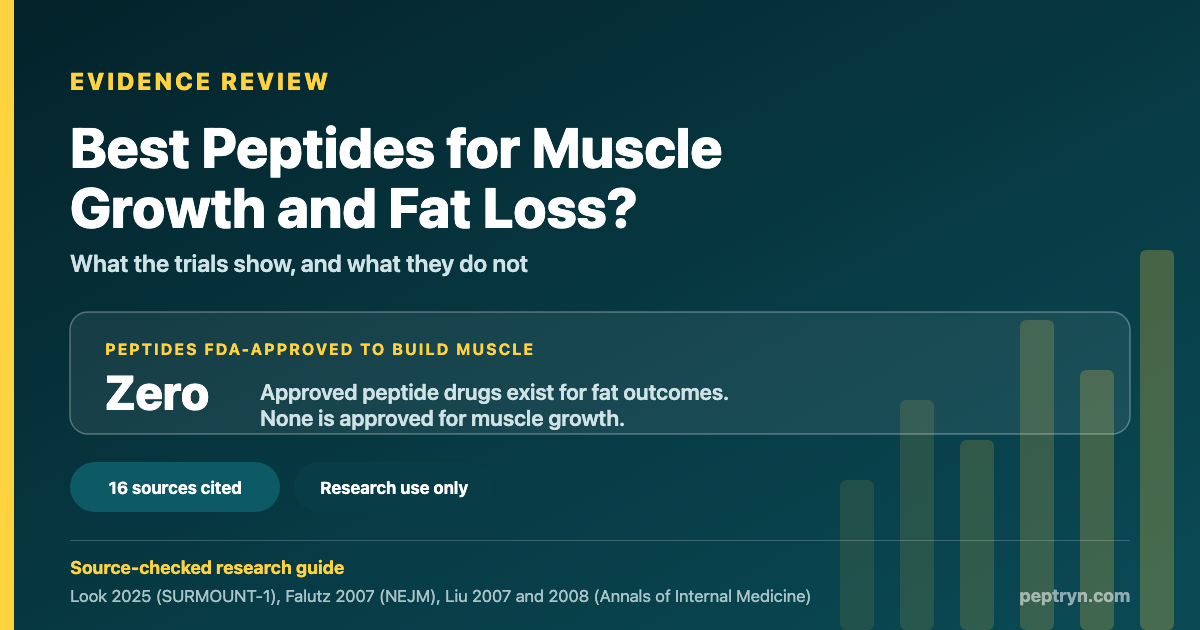
There is no honest ranking of the best peptides for muscle growth and fat loss, because no peptide has been shown in a controlled human trial to build muscle and reduce fat together in healthy adults, and none is FDA-approved for muscle growth. What the research does show is narrower and more interesting. A handful of peptide drugs have strong human trial evidence for reducing fat, most of them approved for obesity or diabetes, and those same trials show that a meaningful share of the weight lost is lean mass. Tesamorelin has trial evidence for reducing visceral (belly) fat in one specific approved population. Growth hormone itself raised lean mass and lowered fat mass in older adults, at the cost of side effects and without a strength gain. Every other compound people search for alongside these, from ipamorelin to BPC-157 to AOD-9604, rests on animal data, hormone-level data, or a human trial that missed its main goal.
This guide goes through each compound’s actual evidence, explains why before-and-after photos are not evidence, covers oral and over-the-counter “peptides for muscle growth,” and lays out what has the best evidence for muscle and fat outside of peptides entirely. For the muscle-only side of the question, see our companion guide to peptides for muscle growth.
Best peptides for muscle growth and fat loss: why there is no ranking
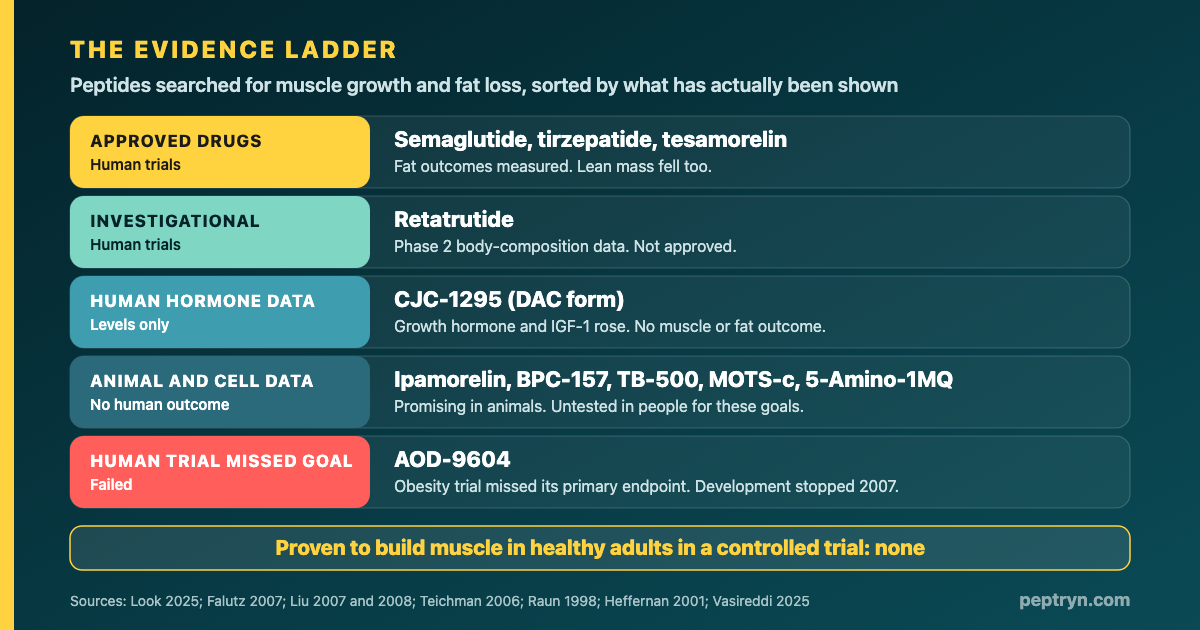
Any list of the “top peptides for muscle growth” or the “best peptides for fat loss and muscle gain” has to answer a question the research has not answered: which compound changes body composition in a healthy person, and by how much. Most of the evidence was gathered in people with a medical condition (obesity, type 2 diabetes, HIV-associated lipodystrophy, growth hormone deficiency), in animals, or in cell culture. That is why the most defensible way to sort the field is by strength of evidence, not by claimed results.
| Compound | Fat-related human evidence | Muscle-related human evidence | Status |
|---|---|---|---|
| Semaglutide | Large randomized trials, including a body-composition substudy | None. Lean mass fell along with fat | FDA-approved (Ozempic, Wegovy) |
| Tirzepatide | Large randomized trials, DXA substudy in SURMOUNT-1 | None. About a quarter of weight lost was lean mass | FDA-approved (Mounjaro, Zepbound) |
| Retatrutide | Phase 2 body-composition substudy in type 2 diabetes | None. Lean mass fell along with fat | Investigational |
| Tesamorelin | 26-week randomized trial: visceral fat reduced | None | FDA-approved as Egrifta, HIV lipodystrophy only |
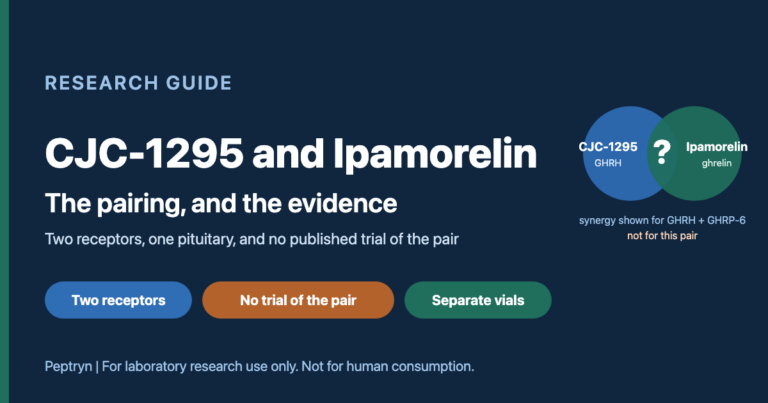
| CJC-1295 | None measured | None. Hormone levels only | Not approved |
| Ipamorelin | None | None. Animal data only | Not approved |
| AOD-9604 | Human obesity trial missed its main goal | None | Not approved |
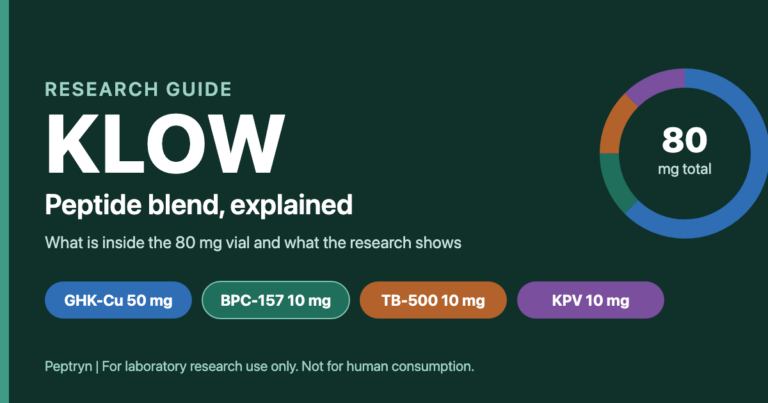
| BPC-157, TB-500 | None | None. Animal data, 1 clinical study for BPC-157 | Not approved |
The pattern is worth stating plainly: the compounds with real fat-related human data are mostly approved prescription drugs, and none of the compounds has muscle-growth data in healthy adults. For identity and FDA-status detail on each, see our list of peptides and what they do.
Peptides for fat loss: what the trials actually measured
“Peptides for fat loss” is one of the most-searched peptide phrases online, and the answer to it is dominated by a single class: GLP-1 pathway peptides. Their trials measure body weight and, in substudies, what the weight was made of.
Semaglutide: the STEP 1 body-composition substudy
Semaglutide is the active compound in Ozempic and Wegovy. In an exploratory body-composition analysis of the STEP 1 trial (Wilding et al., Journal of the Endocrine Society, 2021; 140 participants scanned with DXA), the semaglutide group lost about 8.4 kg of fat mass and about 5.3 kg of lean mass over 68 weeks, while the placebo group lost about 1.4 kg of fat and 1.8 kg of lean mass. Roughly two-fifths of the total loss on semaglutide was lean tissue. Lean mass on a DXA scan includes water and organ tissue, not just skeletal muscle, so this does not equal muscle loss, but it shows that a large fat reduction does not come with muscle preservation automatically.
Tirzepatide: the SURMOUNT-1 DXA substudy
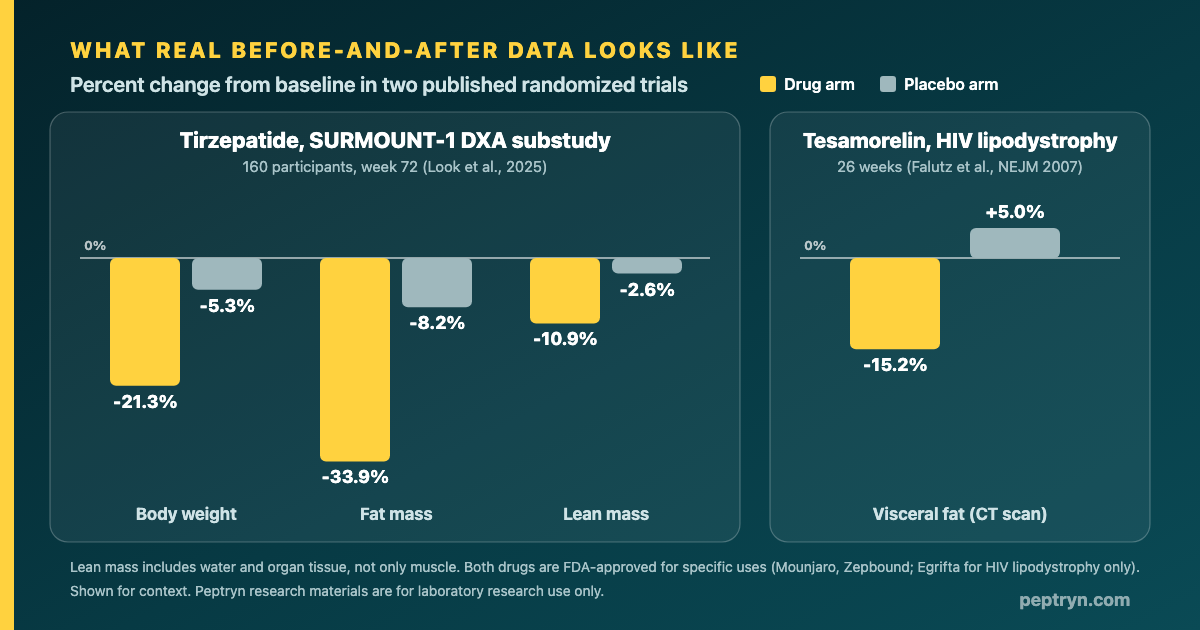
Tirzepatide is the active compound in Mounjaro and Zepbound. A DXA substudy of SURMOUNT-1 (Look et al., Diabetes, Obesity and Metabolism, 2025; 160 participants; PMID 39996356) found that by week 72, body weight fell 21.3% on tirzepatide versus 5.3% on placebo, fat mass fell 33.9% versus 8.2%, and lean mass fell 10.9% versus 2.6%. About 74% of the weight lost was fat and 26% was lean mass, close to the 75% and 25% split in the placebo group. In other words, the proportion stayed similar even as the total loss grew, which is the more reassuring reading, though the absolute amount of lean mass lost was still larger on the drug. Peptryn supplies research-grade tirzepatide for laboratory use only; see our tirzepatide product page.
Retatrutide: a phase 2 body-composition substudy
Retatrutide is Eli Lilly’s investigational triple-pathway peptide. In a phase 2 body-composition substudy in adults with type 2 diabetes (189 participants; The Lancet Diabetes and Endocrinology, 2025; PMID 40609566), total body fat mass at 36 weeks fell by as much as 26.1% in the best-performing retatrutide group, versus 4.5% with placebo and 2.6% with dulaglutide. Lean mass fell by up to 6.5 kg, and the authors reported that the share of weight lost as lean mass was similar to that seen with other obesity drugs. Retatrutide has not been filed with or approved by the FDA. See our retatrutide guide and the comparison with semaglutide and tirzepatide.
Best peptides for belly fat and visceral fat
Searches for the best peptides for belly fat loss and visceral fat loss point to one compound with real trial data: tesamorelin. In the 26-week randomized, placebo-controlled trial that led to its approval (Falutz et al., New England Journal of Medicine, 2007; PMID 18057338), visceral adipose tissue fell by 15.2% in the tesamorelin group and rose by 5.0% in the placebo group. Triglycerides fell by 50 mg per deciliter on tesamorelin and rose by 9 with placebo, and IGF-1 rose by 81%. A pooled analysis of two phase 3 trials (PMID 20554713) confirmed the visceral fat reduction with longer safety follow-up.
Two limits matter. First, the participants were adults with HIV and excess abdominal fat from lipodystrophy, which is why Egrifta’s FDA approval (2010) covers that population only. Second, visceral fat is the fat surrounding internal organs, and the trial measured it by CT scan; it did not test spot reduction of belly fat in healthy adults, and it did not measure muscle.
Can peptides build muscle and reduce fat at the same time?
The only evidence base that shows both effects at once is for growth hormone itself, and it is not the story marketing tells. A 2007 systematic review of healthy older adults (Liu et al., Annals of Internal Medicine; 31 articles, 18 study groups, 220 people receiving growth hormone) found lean body mass up about 2.1 kg and fat mass down about 2.1 kg, with no significant change in body weight. It also found more side effects in the treated groups, including fluid retention, joint pain, carpal tunnel syndrome and insulin resistance. A 2008 review of growth hormone and athletic performance (Liu et al.; 27 study samples, 303 people receiving growth hormone; PMID 18347346) concluded that lean mass appeared to increase but strength may not, exercise capacity may worsen, and adverse events increased.
Peptides that raise growth hormone are often marketed as a milder version of the same result, and the human evidence for that is thin:
- CJC-1295: the main human study (Teichman et al., 2006; PMID 16352683) tested the long-acting DAC version and measured growth hormone and IGF-1 levels, not body composition.
- Ipamorelin: introduced in a 1998 study in rat cells, rats and pigs (Raun et al.; PMID 9849822), with no body-composition trial in people.
- AOD-9604: a fragment of human growth hormone that reduced weight gain in obese mice (Heffernan et al., 2001; PMID 11713213), then failed its primary endpoint in a Phase IIb human obesity trial disclosed in 2007. Development for that use stopped.
- 5-Amino-1MQ: a small molecule, not a peptide, that reduced body weight and fat mass in diet-induced obese mice (Neelakantan et al., 2018) with no published human trials. See our 5-Amino-1MQ guide.
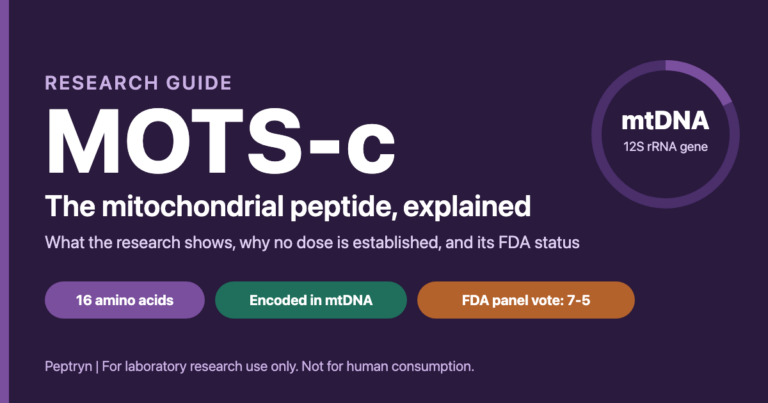
- MOTS-c: a mitochondrial-derived peptide that prevented diet-induced obesity and insulin resistance in mice (Lee et al., Cell Metabolism, 2015; PMID 25738459), with human research limited mostly to measuring its natural levels.
A combined “muscle growth and fat loss” result from any of these compounds in healthy people is a hypothesis, not a finding.
Peptides for muscle growth before and after: why photos are not evidence
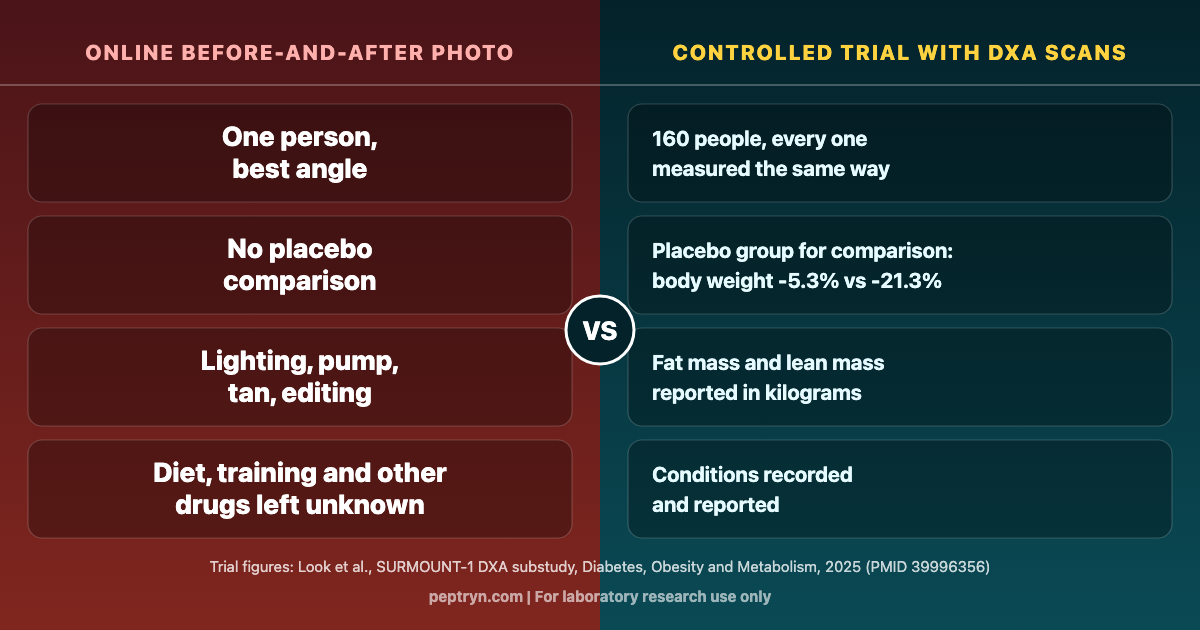
“Before and after” is one of the most-searched phrases in this topic, and it is where the gap between marketing and evidence is widest. A before-and-after photo cannot separate a compound’s effect from everything else that changed, and the problems are structural:
- No control group. Nobody knows what the same person would have looked like over the same weeks without the compound.
- Conditions that change the picture. Lighting, pose, tan, muscle pump, hydration, posture and editing can all move a photo more than a few kilograms of tissue.
- Everything else changed too. Training, diet, sleep and body weight over the same period are almost never reported, and neither is any other substance the person was using.
- Selection. The photos that get published are the best responders, not a typical result.
- Unknown product. An unverified vial may not contain what its label says, which is why a lot-matched certificate of analysis matters (see what is a COA).
What a real before-and-after looks like in research is a measured baseline and follow-up, in many people, against a placebo group, using a scan that reports fat and lean mass in kilograms. The SURMOUNT-1 substudy above is exactly that. Notice what it shows: a large fat reduction, a real lean-mass reduction, and a placebo group that also changed. No published trial provides a photo-style transformation for CJC-1295, ipamorelin, BPC-157 or TB-500.
FDA-approved peptides for fat loss and muscle growth
People searching for FDA-approved peptides for muscle growth are asking a question with a short answer: there are none. No peptide is FDA-approved to build muscle in healthy adults. The FDA-approved peptide drugs that touch body composition are approved for other purposes:
- Semaglutide (Wegovy, approved 2021) and tirzepatide (Zepbound, approved 2023) for chronic body-weight management in adults with obesity or overweight and related conditions.
- Liraglutide (Saxenda, approved 2014), an earlier GLP-1 pathway peptide for the same purpose.
- Setmelanotide (Imcivree, approved 2020), for obesity caused by certain rare genetic conditions.
- Tesamorelin (Egrifta, approved 2010), for excess abdominal fat in HIV-associated lipodystrophy.
An FDA advisory committee vote in July 2026 recommended considering BPC-157, TB-500, KPV, Semax and Epitalon for a pharmacy-compounding list. That vote is advisory and is not an approval of any of them for any use. See our peptide legality guide.
Are there safe peptides for muscle growth?
“Safe” would require long-term human safety data for a specific use, and for the compounds people search for alongside muscle growth, that data does not exist. The one systematic review of BPC-157 in orthopaedic sports medicine (Vasireddi et al., HSS Journal, 2025; PMID 40756949) found 35 preclinical studies and 1 clinical study out of 36, and reported that no clinical safety data were found. For growth hormone, the safety picture is documented and not favorable for healthy people: the 2007 and 2008 reviews above report fluid retention, joint symptoms, carpal tunnel syndrome, insulin resistance and reduced exercise capacity. For the GLP-1 class, the lean-mass findings above are a safety-relevant consideration for anyone with low muscle mass to begin with. Many of these compounds are also prohibited in tested sport by the World Anti-Doping Agency.
Oral peptides, peptide pills and over-the-counter peptides for muscle growth
Searches for oral peptides for muscle growth, peptide pills and over-the-counter peptides are among the fastest-growing in this cluster, and they mix two very different things.
Oral versions of the research peptides. Peptides are chains of amino acids, and the stomach and intestine are built to break chains of amino acids down. Getting a peptide drug to survive that environment is a hard engineering problem: oral semaglutide, the one approved example in this class, needs a permeation-enhancing ingredient (SNAC) to work at all, and its absorption is only about 1%. That is a purpose-built pharmaceutical tablet, and it says nothing about capsules sold as “muscle peptides.” Peptryn’s research materials are lyophilized powders for laboratory use, not oral products.
Over-the-counter “growth peptide” and collagen supplements. These are dietary protein products. The best evidence on protein supplements and muscle comes from a 2018 meta-analysis (Morton et al., British Journal of Sports Medicine; 49 randomized trials, 1,863 participants; PMID 28698222), which found that protein supplementation during resistance training added about 0.30 kg of fat-free mass and 2.49 kg of one-repetition-max strength over training alone. That is a real but modest effect, and it is the ceiling for an ordinary protein supplement.
Peptides for lean muscle growth, recovery and “natural” peptides
Three more phrases show up constantly in this cluster, and each deserves a precise answer.
Peptides for lean muscle growth. “Lean” muscle is a marketing adjective, not a measurement. The only human data on lean mass in this guide come from body-composition scans in growth hormone and GLP-1 trials, and the growth hormone reviews found a gain of about 2.1 kg of lean mass in older adults without a strength benefit. No peptide has been shown to add lean muscle in healthy adults in a controlled trial.
Peptides for muscle growth and recovery. Recovery claims mostly trace to BPC-157 and TB-500. The evidence is animal work: the 2025 BPC-157 systematic review found 35 preclinical studies reporting improved outcomes in muscle, tendon, ligament and bone injury models, and 1 clinical study, a retrospective report on knee pain. Animal injury models are not the same as recovery from training in a healthy person, and the review’s authors concluded that the lack of clinical outcome and safety data prevents evidence-based use guidelines.
Natural peptides for muscle growth. Peptides occur naturally in the body, and that is where the word gets its appeal: growth hormone-releasing hormone and insulin are examples. But a compound being related to a natural signal does not make a synthetic research version natural, safe or effective. Food-derived peptides, such as those in collagen or whey protein, are dietary protein, and the ordinary protein-supplement evidence above applies to them.
How to read a peptide study in five questions
Most peptide marketing borrows the language of a study without its limits. Five questions cut through most of it:
- Who or what was studied? Cells, mice, and people are three different levels of evidence, and people with a medical condition are not healthy adults.
- What was measured? A rise in growth hormone or IGF-1 is a hormone result. Muscle size, strength and fat mass are different outcomes and need their own measurement.
- Was there a placebo group? Without one, change over time cannot be attributed to the compound.
- How long and how large? A few weeks in a small group says little about months of real-world use, and small studies tend to overstate effects.
- Has it been replicated independently? Findings that come from a single research group, especially the same lineage for many years, carry less weight than repeated independent results.
Apply those five questions to any claim about the best peptides for muscle growth and fat loss and most of them dissolve. The claims that survive, such as tesamorelin’s visceral fat result and the GLP-1 class’s fat-mass results, are the ones backed by randomized trials with a placebo and a scan.
What Reddit and forums say versus what the studies show
Searches for “best peptides for muscle growth reddit” and similar phrases reflect how much of this conversation happens in forums. Forum posts are useful for finding questions worth asking, but they cannot answer them, for the same reasons before-and-after photos cannot: there is no placebo group, the product identity is unverified, results are self-reported and self-selected, and other variables go unrecorded. A confident claim in a thread about a specific compound and a specific result should be read as an anecdote. The evidence tiers in this guide are the more reliable map.
Peptides for women and men: is the evidence different?
Queries such as best peptides for female muscle growth, peptides for women muscle growth and muscle growth peptides for men assume the answer differs by sex. None of the studies cited in this guide was designed to test a muscle benefit, in women or in men, so the honest answer for both is the same: no peptide is approved for muscle growth, and the human muscle evidence is absent. The safety and lean-mass considerations above apply regardless of sex.
What has the best evidence for muscle and fat
It is worth saying directly that the interventions with the strongest evidence for gaining muscle and losing fat are not peptides. Progressive resistance training is the driver of muscle gain in healthy adults, and the protein meta-analysis above shows that protein intake adds a small, real increment on top of it. For people using GLP-1 pathway drugs, the lean-mass findings from STEP 1 and SURMOUNT-1 are the reason clinicians emphasize protein intake and resistance exercise alongside them. A guide that puts a peptide ahead of those basics is putting marketing ahead of the data.
Why there is no established dose, timing or schedule
Many searches in this topic ask when to take peptides for muscle growth or how to dose them. No controlled human trial has established a dose, timing, route or schedule of CJC-1295 (no DAC), ipamorelin, BPC-157, TB-500, AOD-9604 or 5-Amino-1MQ for muscle growth or fat loss. The doses in the trials described above were supervised research or approved-drug protocols, and they do not transfer to self-administration. Any chart or schedule in circulation is extrapolated from animal work, vendor material or anecdote. For that reason this guide does not give doses, timing, routes or schedules.
How much do research peptides cost, and what to check before buying
Pricing for research-use-only peptides varies by compound, vial size and supplier, and price alone is a poor signal. A listing that is much cheaper than the rest of the market with no published certificate of analysis is usually saving money on testing. Three checks matter more than price:
- A lot-matched certificate of analysis. The report should match the lot you receive (see what is a COA).
- Independent testing and what it covers. Purity, identity and endotoxin testing by an outside lab (see peptide purity).
- Honesty about claims. A supplier that promises muscle growth or fat loss from a research compound is making a claim the science does not support.
Peptryn sells research-grade materials strictly for in-vitro laboratory research, never for human or veterinary use, and you must be 21 or older to order. If you are comparing suppliers for laboratory work, start with the documentation.
Comparing research-peptide suppliers for laboratory work?
See the lot-level certificates of analysis before you look at a single price, then browse the catalog.
For where research peptides are sold and how the legal categories differ, see our guide to peptides for muscle growth, which covers the three product categories in detail.
Common questions
What are the best peptides for muscle growth and fat loss?
The research does not support a ranking. No peptide has been shown to build muscle and reduce fat together in healthy adults. The compounds with the strongest fat-related human evidence are approved drugs (semaglutide, tirzepatide, tesamorelin), and those trials also show lean mass falling along with fat.
What are the best peptides for fat loss and muscle gain?
None has been proven to do both. Tesamorelin reduced visceral fat by 15.2% in a specific approved population, growth hormone raised lean mass by about 2.1 kg in older adults without improving strength, and the GLP-1 class reduced fat while also reducing lean mass.
Which peptides are best for muscle growth?
No peptide is approved for muscle growth, and none has human muscle-growth data in healthy adults. The compounds most often discussed are CJC-1295, ipamorelin, BPC-157 and TB-500, and their evidence is limited to hormone levels or animal studies. See our peptides for muscle growth guide.
Do GLP-1 peptides cause muscle loss?
In the STEP 1 substudy, semaglutide reduced lean mass by about 5.3 kg alongside 8.4 kg of fat mass. In SURMOUNT-1, about 26% of the weight lost on tirzepatide was lean mass. Lean mass on a DXA scan includes water and organ tissue, so it is not the same as skeletal muscle, but muscle is part of it.
What is the best peptide for belly fat or visceral fat?
Tesamorelin has the trial evidence, reducing visceral fat by 15.2% in adults with HIV-associated lipodystrophy, and it is approved only for that population. It has not been tested for belly fat in healthy adults.
Are there FDA-approved peptides for muscle growth?
No. Approved peptide drugs exist for obesity (semaglutide, tirzepatide, liraglutide, setmelanotide) and for abdominal fat in HIV lipodystrophy (tesamorelin), but none is approved to build muscle.
Do before and after photos prove peptides work?
No. Photos have no control group and cannot separate a compound’s effect from training, diet, lighting, pose, editing or other substances. Controlled trials with DXA scans and a placebo group are the meaningful before-and-after.
Do oral peptides or peptide pills build muscle?
There is no evidence that they do. Peptides are broken down in the digestive tract, and even purpose-built oral semaglutide is absorbed at only about 1% with the help of an absorption enhancer. Over-the-counter protein and collagen supplements added about 0.30 kg of fat-free mass in a large meta-analysis of resistance training.
Are peptides for muscle growth safe?
Long-term human safety has not been established for the research peptides discussed here. A 2025 systematic review found no clinical safety data for BPC-157, and growth hormone in healthy older adults was associated with fluid retention, joint pain, carpal tunnel syndrome and insulin resistance.
Are peptides for muscle growth different for women?
No peptide is approved for muscle growth in women or men, and none of the studies cited here was designed to test a muscle benefit in either sex.
How do you get peptides for muscle growth?
There is no approved route for muscle growth. Peptide drugs are prescribed by licensed providers for approved indications such as obesity or HIV-associated abdominal fat, and research-use-only suppliers sell materials to laboratories for in-vitro research, not for human use. See our guide to where peptides are sold and how the categories differ.
Are there natural peptides for muscle growth?
Peptides occur naturally in the body, but no natural or synthetic peptide has been shown to build muscle in healthy adults in a controlled trial. Food-derived protein and collagen supplements added about 0.30 kg of fat-free mass in a large meta-analysis of resistance training.
When should you take peptides for muscle growth?
No controlled human trial has established a timing, dose or schedule for any research peptide for muscle growth, so this guide does not provide one.
How much do peptides for muscle growth cost?
Prices for research-use-only peptides vary by compound, size and supplier. An unusually low price with no published, lot-matched certificate of analysis is a warning sign, since testing is the cost that gets skipped.
Related: Peptides for muscle growth · List of peptides and what they do · What is a COA? · Popular peptides
Sources
Look M, et al. Body composition changes during weight reduction with tirzepatide in the SURMOUNT-1 study of adults with obesity or overweight. Diabetes, Obesity and Metabolism, 2025 (PMID 39996356). pubmed.ncbi.nlm.nih.gov
Wilding J, et al. Impact of semaglutide on body composition in adults with overweight or obesity: exploratory analysis of the STEP 1 study. Journal of the Endocrine Society, 2021. academic.oup.com
Effects of retatrutide on body composition in people with type 2 diabetes: a substudy of a phase 2 randomised trial. The Lancet Diabetes and Endocrinology, 2025 (PMID 40609566). pubmed.ncbi.nlm.nih.gov
Falutz J, et al. Metabolic effects of a growth hormone-releasing factor in patients with HIV. New England Journal of Medicine, 2007 (PMID 18057338). nejm.org
Falutz J, et al. Effects of tesamorelin in HIV-infected patients with excess abdominal fat: pooled analysis of two phase 3 trials (PMID 20554713). pubmed.ncbi.nlm.nih.gov
Liu H, et al. Systematic review: the safety and efficacy of growth hormone in the healthy elderly. Annals of Internal Medicine, 2007;146(2):104-115. doi.org/10.7326/0003-4819-146-2-200701160-00005
Liu H, et al. Systematic review: the effects of growth hormone on athletic performance. Annals of Internal Medicine, 2008 (PMID 18347346). pubmed.ncbi.nlm.nih.gov
Teichman SL, et al. Prolonged stimulation of growth hormone and IGF-I secretion by CJC-1295. Journal of Clinical Endocrinology and Metabolism, 2006 (PMID 16352683). pubmed.ncbi.nlm.nih.gov
Raun K, et al. Ipamorelin, the first selective growth hormone secretagogue. European Journal of Endocrinology, 1998 (PMID 9849822). pubmed.ncbi.nlm.nih.gov
Heffernan M, et al. The effects of human GH and its lipolytic fragment (AOD9604) on lipid metabolism. Endocrinology, 2001 (PMID 11713213). pubmed.ncbi.nlm.nih.gov
Neelakantan H, et al. Selective and membrane-permeable small molecule inhibitors of nicotinamide N-methyltransferase reverse high fat diet-induced obesity in mice. Biochemical Pharmacology, 2018 (PMID 29155147). pubmed.ncbi.nlm.nih.gov
Lee C, et al. The mitochondrial-derived peptide MOTS-c promotes metabolic homeostasis and reduces obesity and insulin resistance. Cell Metabolism, 2015 (PMID 25738459). pubmed.ncbi.nlm.nih.gov
Vasireddi N, et al. Emerging use of BPC-157 in orthopaedic sports medicine: a systematic review. HSS Journal, 2025 (PMID 40756949). pubmed.ncbi.nlm.nih.gov
Morton RW, et al. A systematic review, meta-analysis and meta-regression of the effect of protein supplementation on resistance training-induced gains in muscle mass and strength in healthy adults. British Journal of Sports Medicine, 2018 (PMID 28698222). pubmed.ncbi.nlm.nih.gov
Current understanding of SNAC as an absorption enhancer: the oral semaglutide experience. Clinical Diabetes, 2024. diabetesjournals.org
U.S. Food and Drug Administration. July 23-24, 2026: Meeting of the Pharmacy Compounding Advisory Committee. fda.gov
For laboratory research use only. Not for human or veterinary use, and not a drug, food, dietary supplement or cosmetic. You must be 21 or older to buy.