BPC-157: what it is, what the research shows and how to check a vial
BPC-157 explained: what it is, what animal and human studies show, half-life, FDA and WADA status, and five checks for a vial’s certificate of analysis.

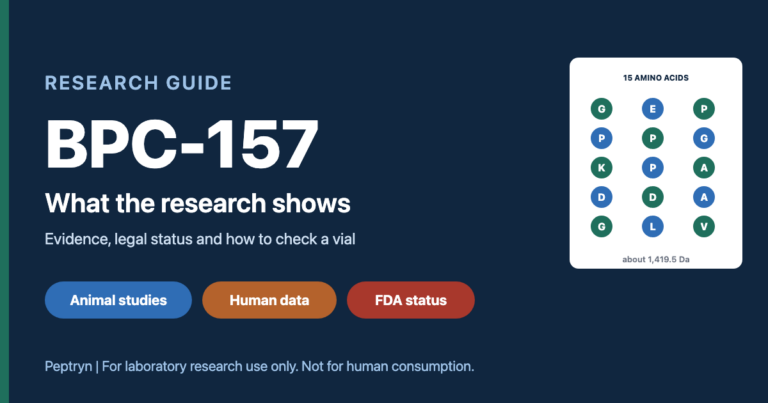
BPC-157 explained: what it is, what animal and human studies show, half-life, FDA and WADA status, and five checks for a vial’s certificate of analysis.
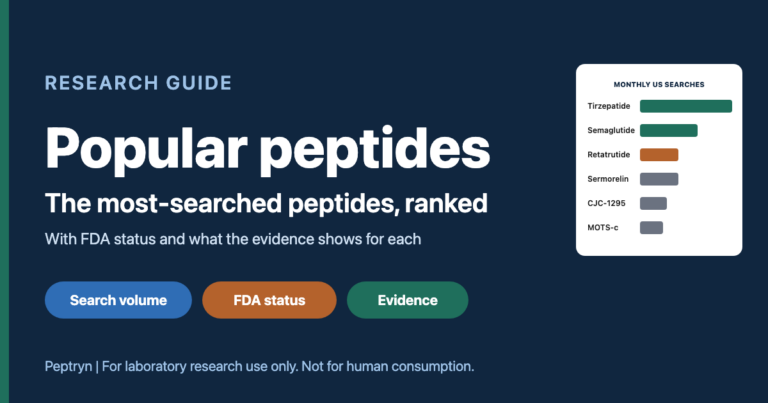
Popular peptides ranked by US search volume, with FDA status and what the evidence shows for tirzepatide, retatrutide, CJC-1295, MOTS-c, SS-31 and more.
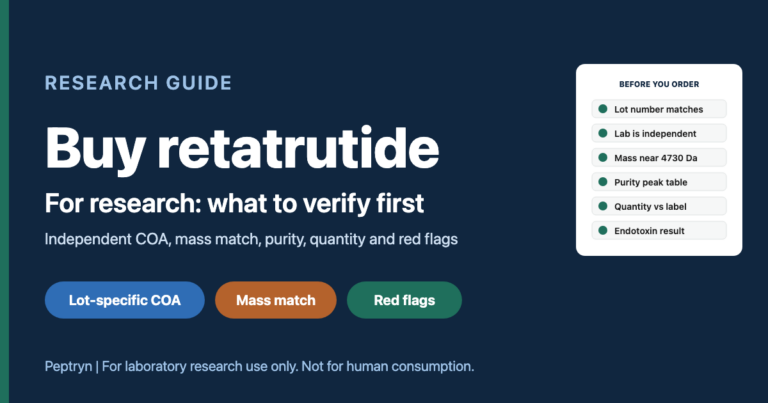
Buying retatrutide for research? See what a real COA shows, the identity and purity checks, published quality data on online vials, and red flags.
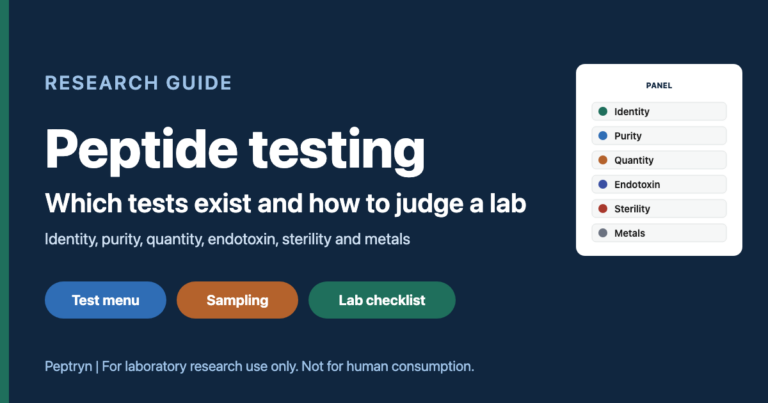
Peptide testing explained: the tests in a full panel (purity, identity, quantity, endotoxin, sterility, metals), sampling, and how to judge a testing lab.
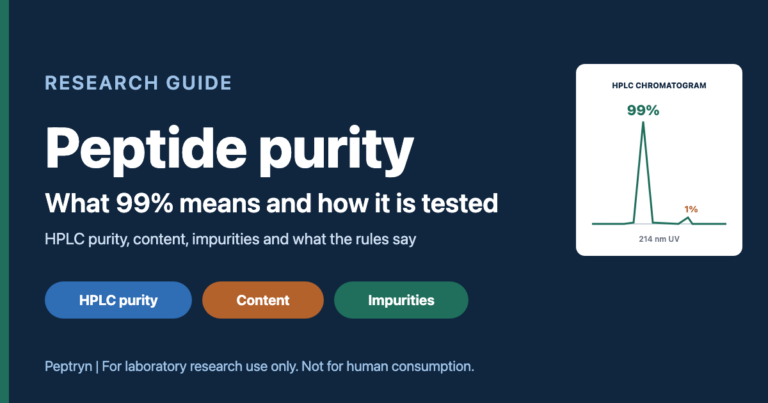
Peptide purity explained: what 99% HPLC purity means, how it differs from peptide content, what the other 1% is, and what EU rules say about limits.
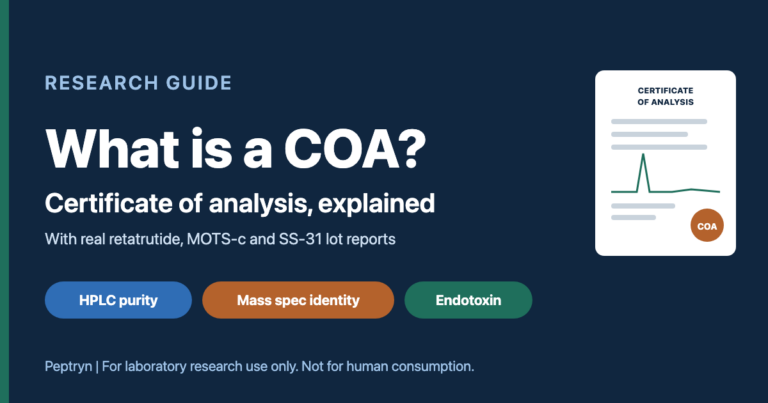
What is a COA? A certificate of analysis is a lab report for one lot. See what COAs show for retatrutide, MOTS-c and SS-31, and how to check one.
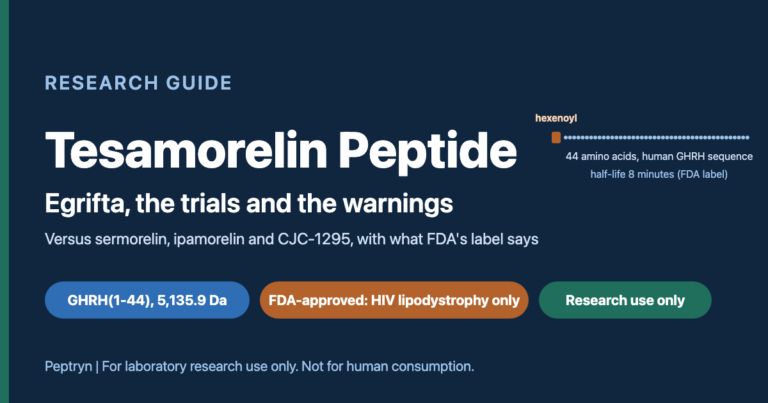
Tesamorelin peptide explained: FDA-approved Egrifta, phase 3 and liver fat trials, cancer and glucose warnings, vs sermorelin and ipamorelin, and its COA.
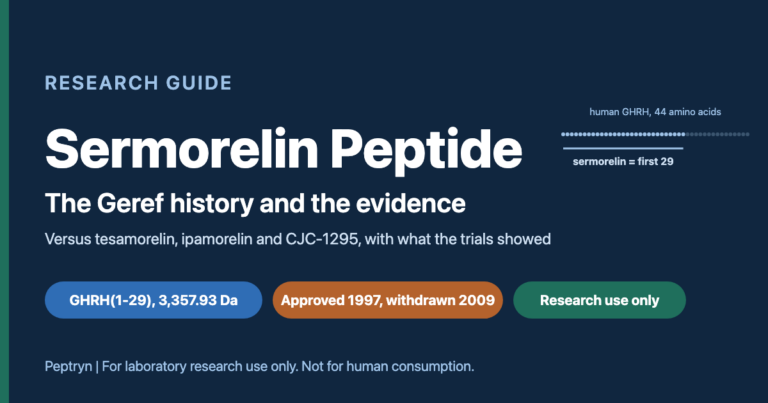
Sermorelin peptide explained: Geref’s FDA history, what child and adult trials showed, sermorelin vs tesamorelin, ipamorelin and CJC-1295, and its COA.
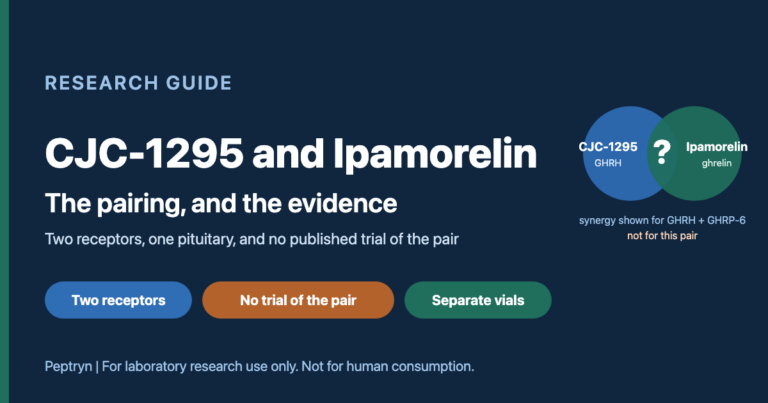
CJC-1295 and ipamorelin explained: why the pair is used, what the GHRH plus GHRP evidence is, blend math, dosage claims, FDA and WADA status.
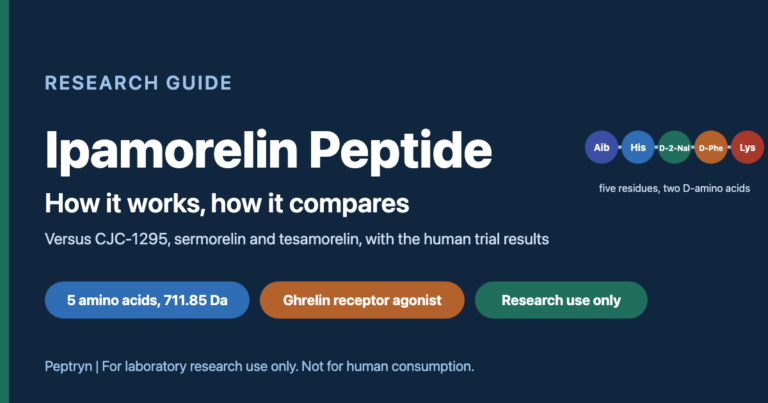
Ipamorelin peptide explained: how it works, ipamorelin vs CJC-1295, sermorelin and tesamorelin, human trial results, FDA and WADA status, and its COA.
We use cookies for basic site analytics (Google Analytics, Microsoft Clarity) to understand how visitors use Peptryn. You can accept or decline non-essential cookies below. See our Privacy Policy for details.