CJC-1295 Peptide: With DAC vs Without DAC, Mod GRF 1-29, and What the Research Shows
CJC-1295 peptide explained: with DAC vs without DAC (Mod GRF 1-29), what human studies tested, FDA and WADA status, and how to read a COA.

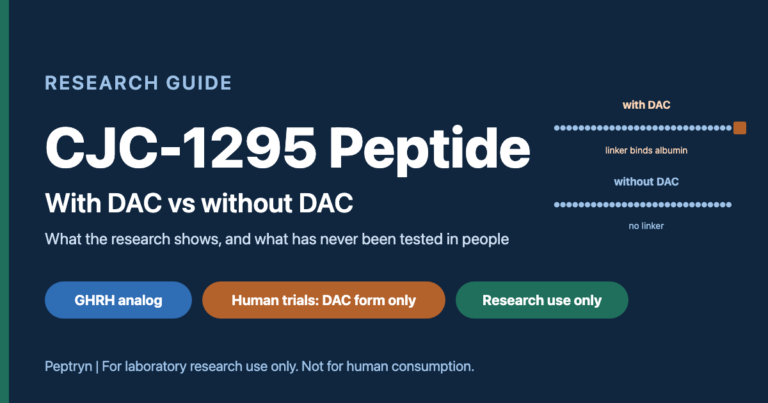
CJC-1295 peptide explained: with DAC vs without DAC (Mod GRF 1-29), what human studies tested, FDA and WADA status, and how to read a COA.
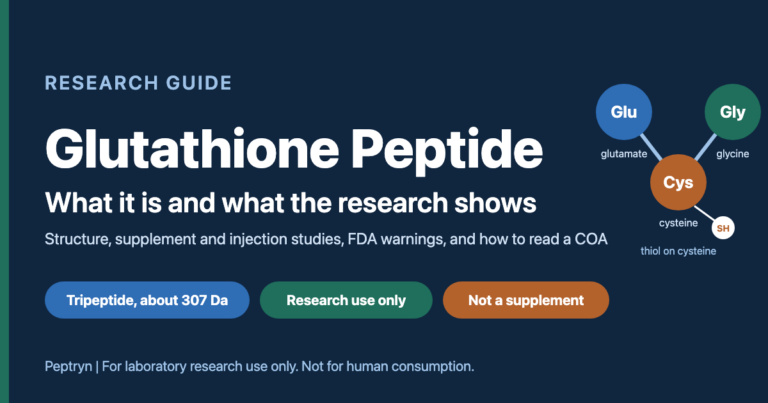
Glutathione peptide explained: structure, how cells make it, what oral and injection studies show, FDA warnings, and how to read a COA.
Are peptides legal in the US? FDA approval, compounding, research use only labels and the August 2026 warning letters, sourced to FDA. Not legal advice.
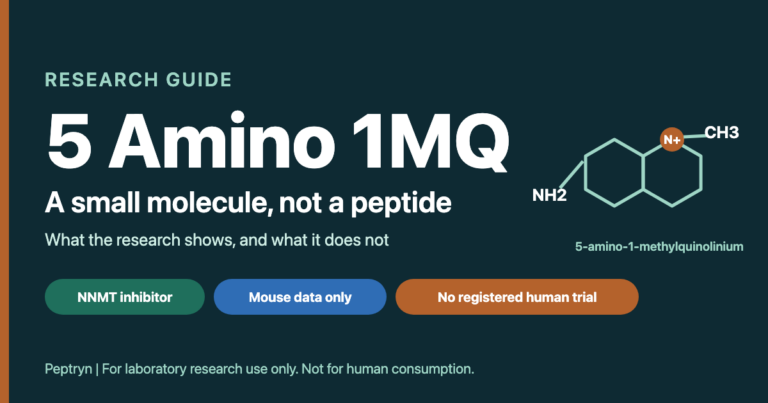
What is 5 amino 1MQ? A sourced guide to the NNMT inhibitor: why it is not a peptide, what mouse studies show, why no dose exists, and how to vet a vial.
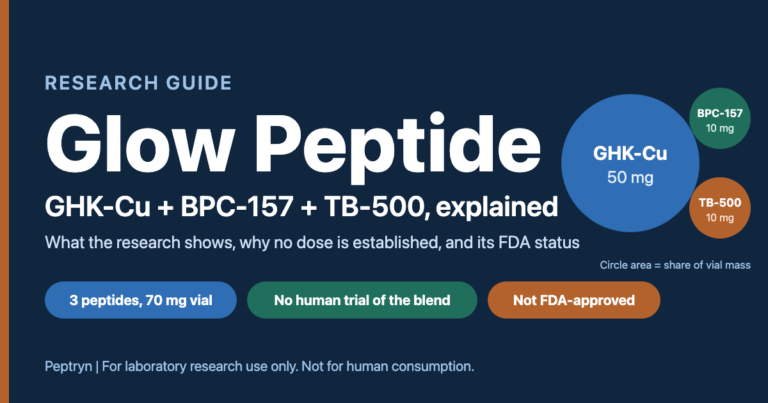
What is Glow peptide? A source-checked guide to the GHK-Cu, BPC-157 and TB-500 blend: the research, why no dose exists, FDA status, and how to vet a vial.
What is MOTS-c? A source-checked guide to the mitochondrial peptide: what human and animal research shows, why no dose is established, and its FDA status.
SS-31 peptide is elamipretide, FDA-approved for Barth syndrome. See the evidence, how the drug differs from research vials, and SS-31 vs MOTS-c.
Retatrutide reconstitution guide: BAC water for 10, 30 & 60 mg vials, syringe-unit math, storage, and tirzepatide vs retatrutide. Research use only.
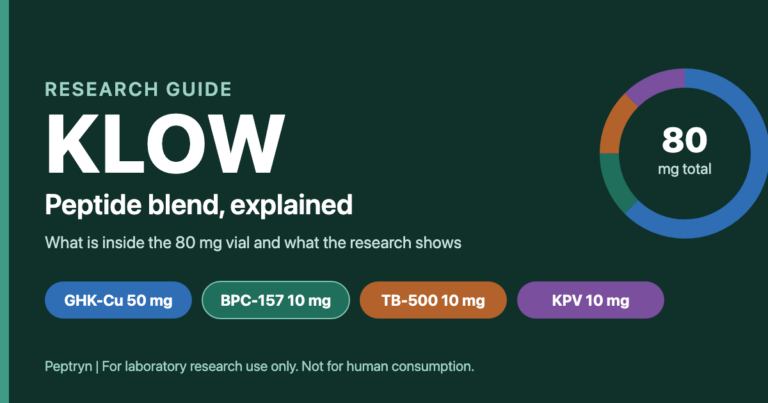
What is Klow peptide? The 80 mg blend of GHK-Cu, BPC-157, TB-500 and KPV explained: what each does in research, the evidence, FDA status, Klow vs Glow.
What is the Wolverine peptide? A source-checked guide to the BPC-157 + TB-500 stack: what research exists, FDA and WADA status, and how to vet a blend.
We use cookies for basic site analytics (Google Analytics, Microsoft Clarity) to understand how visitors use Peptryn. You can accept or decline non-essential cookies below. See our Privacy Policy for details.