What is a COA? Certificate of analysis explained for peptides
What is a COA? A certificate of analysis is a lab report for one lot. See what COAs show for retatrutide, MOTS-c and SS-31, and how to check one.

Guides and reference material for laboratory researchers working with Peptryn compounds.
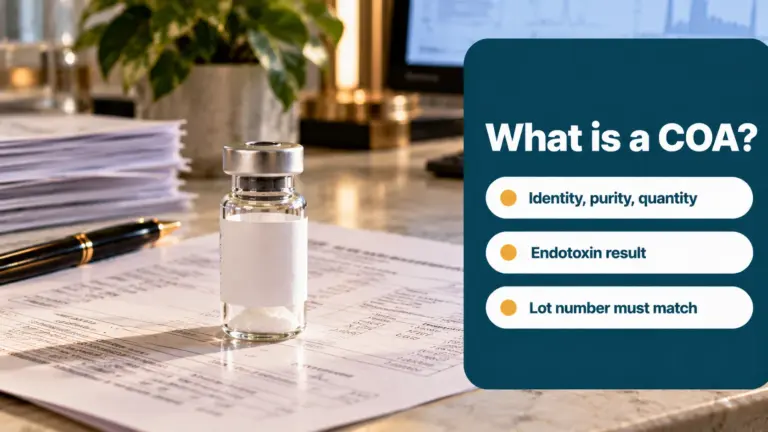
What is a COA? A certificate of analysis is a lab report for one lot. See what COAs show for retatrutide, MOTS-c and SS-31, and how to check one.
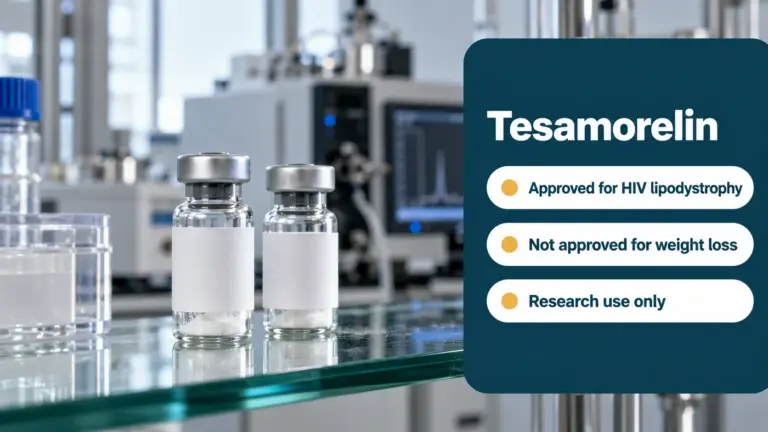
Tesamorelin peptide explained: FDA-approved Egrifta, phase 3 and liver fat trials, cancer and glucose warnings, vs sermorelin and ipamorelin, and its COA.
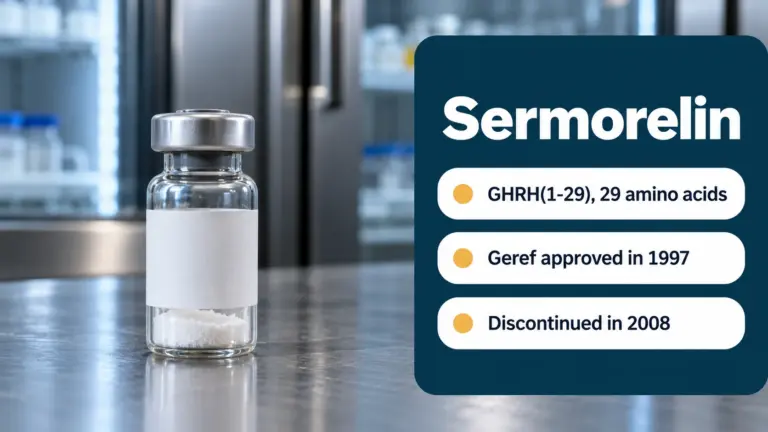
Sermorelin peptide explained: Geref’s FDA history, what child and adult trials showed, sermorelin vs tesamorelin, ipamorelin and CJC-1295, and its COA.
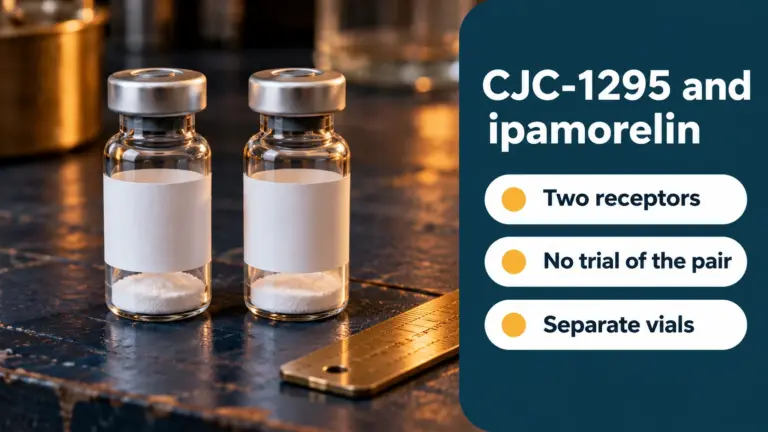
CJC-1295 and ipamorelin explained: why the pair is used, what the GHRH plus GHRP evidence is, blend math, dosage claims, FDA and WADA status.
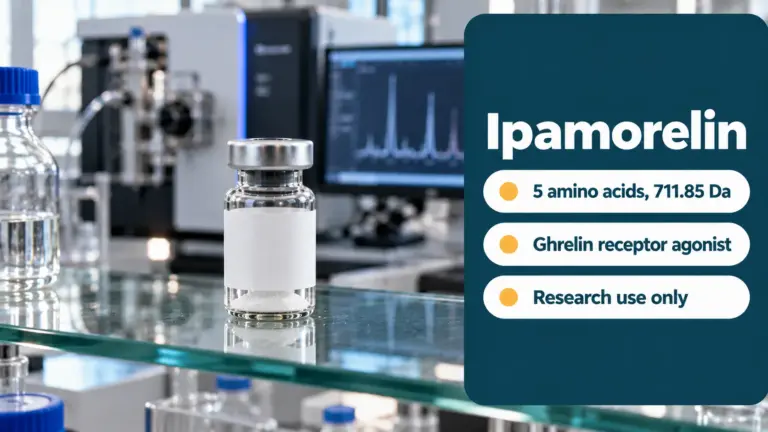
Ipamorelin peptide explained: how it works, ipamorelin vs CJC-1295, sermorelin and tesamorelin, human trial results, FDA and WADA status, and its COA.
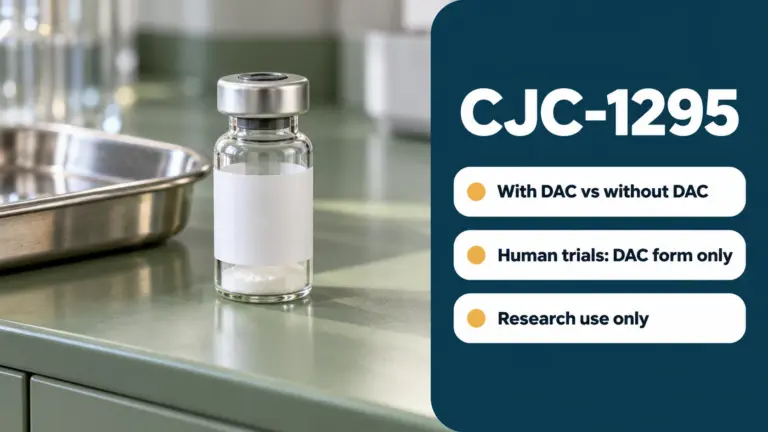
CJC-1295 peptide explained: with DAC vs without DAC (Mod GRF 1-29), what human studies tested, FDA and WADA status, and how to read a COA.
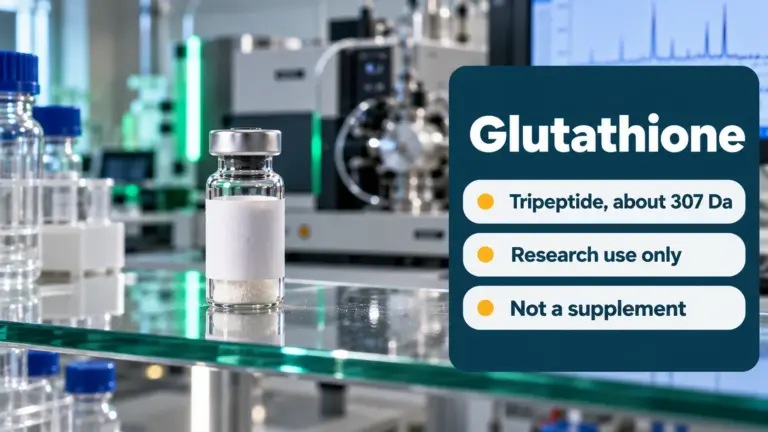
Glutathione peptide explained: structure, how cells make it, what oral and injection studies show, FDA warnings, and how to read a COA.
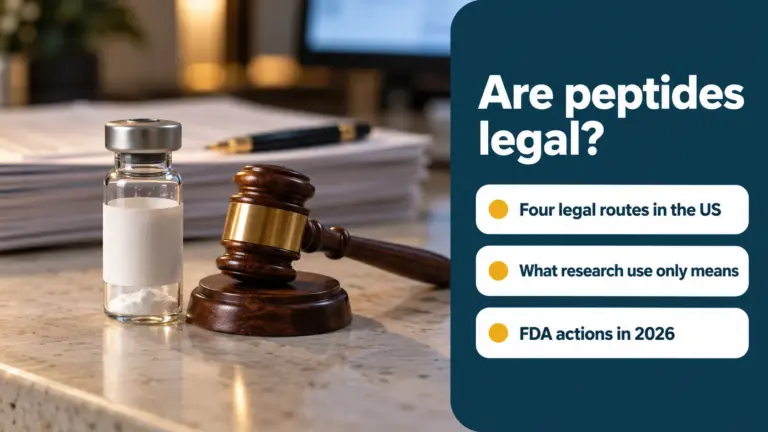
Are peptides legal in the US? FDA approval, compounding, research use only labels and the August 2026 warning letters, sourced to FDA. Not legal advice.
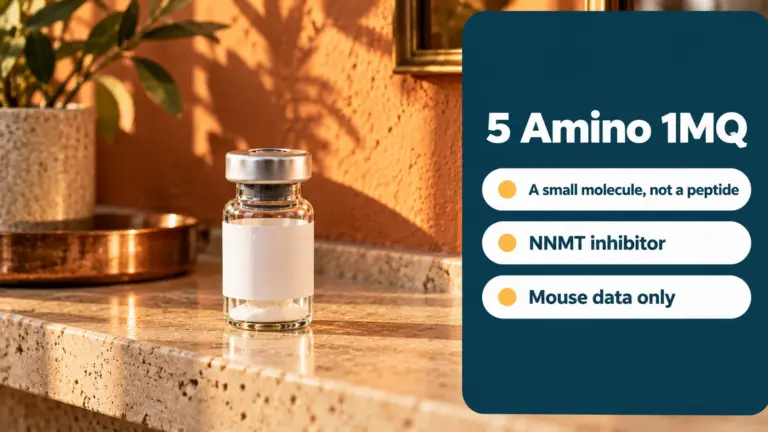
What is 5 amino 1MQ? A sourced guide to the NNMT inhibitor: why it is not a peptide, what mouse studies show, why no dose exists, and how to vet a vial.
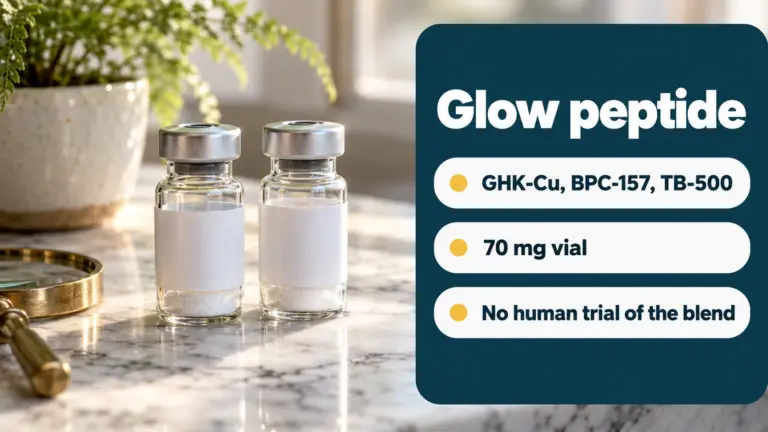
What is Glow peptide? A source-checked guide to the GHK-Cu, BPC-157 and TB-500 blend: the research, why no dose exists, FDA status, and how to vet a vial.
We use cookies for basic site analytics (Google Analytics, Microsoft Clarity) to understand how visitors use Peptryn. You can accept or decline non-essential cookies below. See our Privacy Policy for details.