What Is Klow Peptide Used For? Research Applications of the 80 mg Blend
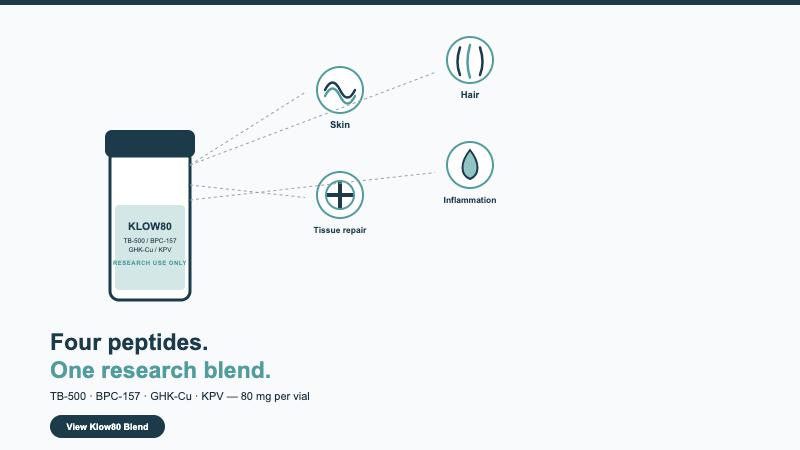
Quick answer: Klow (sold as a Klow80 Blend) is a pre-mixed combination of four research peptides, each studied for a different area: GHK-Cu for skin and hair-follicle research, BPC-157 and TB-500 for tissue and gut-lining repair research, and KPV for anti-inflammatory signaling research. It’s sold as an 80 mg lyophilized vial for laboratory use, not as a treatment for any condition. Peptryn’s Klow80 Blend ships with a published, lot-specific COA; see the current one here.
This guide walks through the four research areas Klow is used for, which ingredient drives each one, and how to evaluate a vial before you buy. For the full composition breakdown and a deeper research review, see our complete Klow Peptide guide.
For laboratory and research use only. Nothing in this article is medical advice, and none of the compounds discussed are approved by the FDA for human use.
The Four Research Areas Klow Is Used For
Skin and Collagen Research
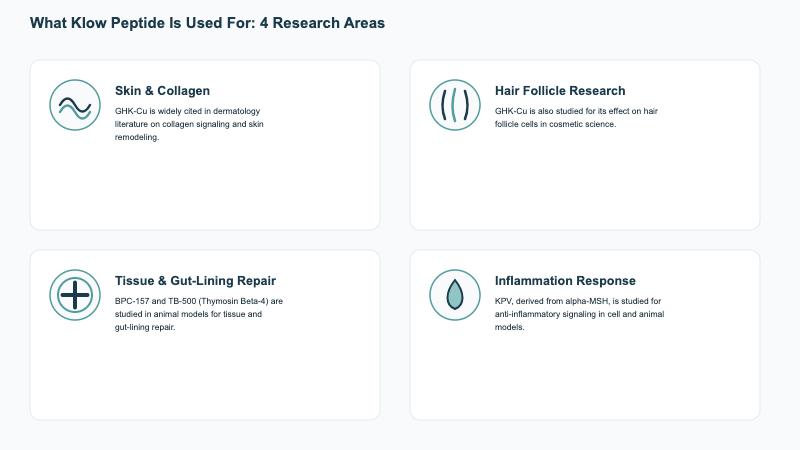
GHK-Cu, the largest component in a Klow vial at 50 mg, is one of the most published peptides in cosmetic science. It appears regularly in dermatology literature studying collagen signaling and skin remodeling, and it’s a common ingredient in topical skincare sold without a prescription. This is the research angle most directly tied to the name “Klow” and its sibling blend, Glow.
Hair Follicle Research
The same GHK-Cu component also shows up in research on hair follicle cells, which is why blends built around it get marketed toward hair-related research alongside skin research. The literature here is cosmetic-science research, not clinical dermatology trials in humans.
Tissue and Gut-Lining Repair Research
BPC-157 and TB-500 (the research name for synthetic Thymosin Beta-4) are both studied in animal and in-vitro models for tissue repair. BPC-157 originates from a protective compound found in gastric juice and has a research history in gut-lining studies; TB-500 is studied for its role in actin regulation and wound healing in animal models. Neither has human clinical trial data behind it.
Inflammation Response Research
KPV is the ingredient that separates Klow from Glow. It’s a tripeptide (Lysine-Proline-Valine, molecular formula C₁₆H₃₀N₄O₄) derived from the C-terminal end of alpha-MSH (alpha-melanocyte-stimulating hormone), and it’s studied for anti-inflammatory signaling, including effects on NF-κB pathway activity in cell and animal models.
Why These Four Peptides Are Combined
Each of the four research areas above comes from a different peptide, and the combination exists because researchers studying skin, hair, tissue repair, and inflammation together found it more practical to source one vial than four. That convenience doesn’t mean the four-peptide combination itself has been studied as a single formulation; the research base for “what Klow is used for” is really four separate research literatures on four separate compounds, sold together.
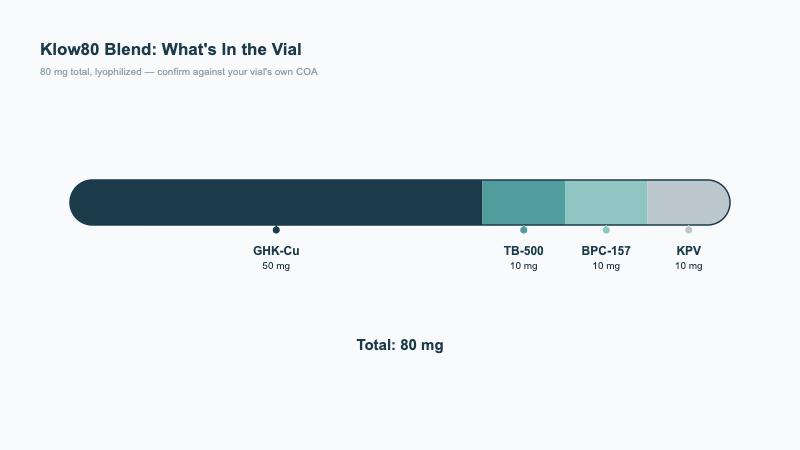
A standard Klow80 vial breaks down as GHK-Cu 50 mg, TB-500 10 mg, BPC-157 10 mg, and KPV 10 mg, for 80 mg total. That’s 10 mg more than a Glow blend (TB-500, BPC-157, GHK-Cu at 70 mg), with KPV as the added ingredient. If you want the full side-by-side, see our Glow Peptide guide.
How to Evaluate a Klow Vial Before You Buy
Because research peptides aren’t FDA-regulated for quality, the same verification checklist applies to Klow as to any blend:
- A batch-specific COA, tied to the lot number on your vial, reporting purity by HPLC and identity by mass spectrometry.
- Independent lab testing, named on the COA so you can verify the lab’s existence and accreditation.
- Endotoxin testing, reported separately from purity.
- “Research use only” labeling, with no human dosing instructions or medical claims.
- US-based shipping and support, so a bad batch is easier to resolve.
- Lyophilized storage, reconstituted by the buyer rather than sold pre-mixed.
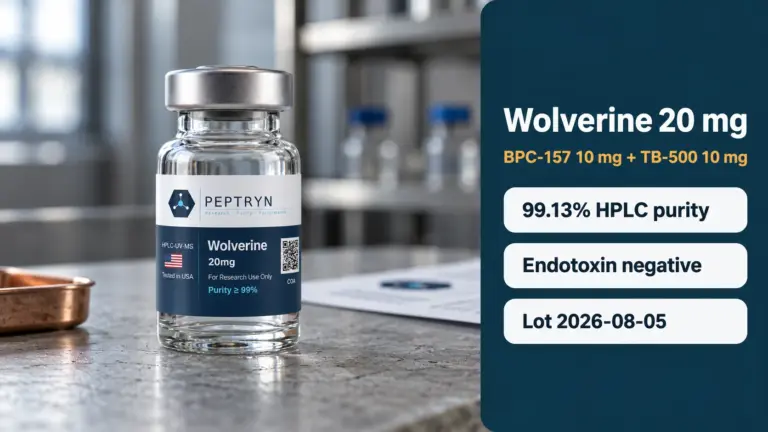
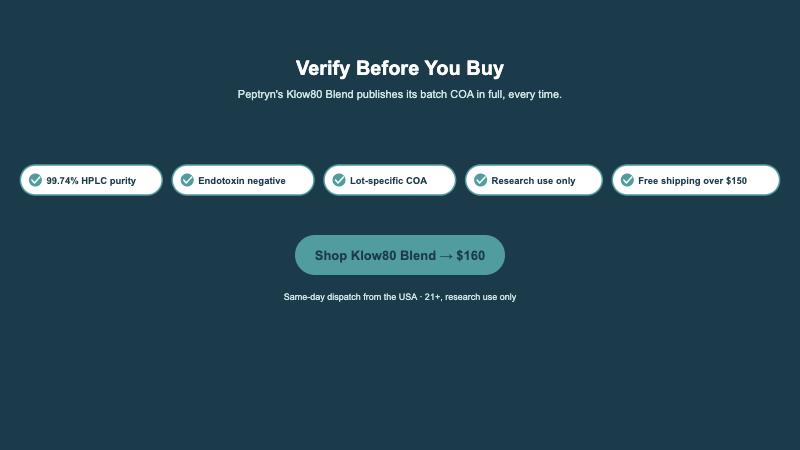
Peptryn’s Klow80 Blend is sold at this standard: the current lot reads 99.74% HPLC purity, endotoxin-negative, tested by MZ Biolabs, with the COA published in full rather than gated behind a request. Hold every vendor to that bar, not just Peptryn.
Reviews and Anecdotal Reports
Search “klow peptide reviews” and you’ll find forum posts describing personal experience with the blend. Those reports aren’t controlled studies, so they can’t isolate what the blend did from what diet, sleep, or training changes did over the same period. They’re useful for seeing what other buyers ask about (storage, which vendors they’ve reordered from) but not as a substitute for the peptide research cited above.
Ready to Research?
Klow80 Blend ships lyophilized with a lot-specific COA, free shipping over $150, and same-day dispatch from the USA.
FAQ
What is Klow peptide used for? Klow combines four research peptides, each studied for a different area: GHK-Cu for skin and hair-follicle research, BPC-157 and TB-500 for tissue and gut-lining repair research, and KPV for anti-inflammatory signaling research.
Is Klow the same as Glow? No. Both contain TB-500, BPC-157, and GHK-Cu, but Klow adds a fourth ingredient, KPV, and is sold at 80 mg total instead of Glow’s 70 mg.
What does KPV do in Klow? KPV is a tripeptide derived from alpha-MSH, studied for anti-inflammatory signaling in cell and animal models. It’s the ingredient that distinguishes Klow from Glow.
Does Klow peptide work? Each of the four compounds has individual preclinical research behind it. The four-peptide combination itself hasn’t been independently studied as a single formulation.
Where can I buy Klow peptide? From a supplier that publishes a batch-specific, independently tested COA, labels the product for research use only, and ships from a verifiable US address. See our full composition and buying guide for the checklist.
Sources
- PubChem CID 9941957: Pentadecapeptide BPC 157
- PubChem CID 71587328: Copper Tripeptide-1 (GHK-Cu)
- PubChem CID 45382195: Thymosin Beta-4
- PubChem CID 125672: Lysylprolylvaline (KPV)
- Peptryn, Klow80 Blend product page and published Certificate of Analysis